Tuesday, February 20, 2007

Hair, Lunar New Year, and Temples

I am headed back up to Chapagaon today after a few days in Boudhanath visiting friends and attending the Lunar NewYear festivities. Today should be a slow day of reflection and meditation, as it is Ash Wednesday, after all, the first day of the Spring fasting and planting season.

My birthday is on Saturday, and I plan on celebrating it with a Tara offering ritual (Female Compassionate Buddha of Liberation, who clears obstacles and grants long-life), and a feast with all the monks at the Chapagaon monastery. It is a nice way for me to give them a party. After the feast and some digestion, we will have a soccer tournament!


SEVERING HAIR, SEVERING ATTACHMENT:

As all things, my dreadlocked hair is definately impermanent. Phagchog Rinpoche decided to demonstrate this to me in a direct way last week with a quick haircut, my first in almost six years.

After my hair cutting blessing by His Eminence Phagchog Rinpoche. I have been offering my obscuration and defilement saturated locks to power places in the Kathmandu Valley with a prayer for purification.

Self portrait as of new haircut today.

But at least I didn't shave my head and become a monk, like this little guy, our youngest addition to the sangha in Chapagaon. Now there are 45 monks at the monastery!

Cute monks playing on a tree, photo taken by other cute young monks. They are pretty good photographers, sometimes.

More cute monks in front of a doorhang, taken by other cute young monks when I wasn't around.


LUNAR NEW YEAR PHOTOS:

May the New Fire Hog year 2007-2008 be auspicious for all, may our obstacles for selfless action be dispelled for the sake of all beings!

A charming little Tibetan girl eating some ice cream her own way. Since its Tibetan New Years, her parents have her all dressed up in a brand new red chupa (Tibetan ladies dress).

The great stupa Boudhanath, in the neighborhood I have lived in for part of the last three and a half years. A Nepali guy has shimmied up the pole in the foreground to hang some new prayerflags, as it was Tibetan Lunar New Year (Losar).

Some of the young monks I am working with in Chapagaon all dressed up in the ceremonial yellow robe at the Lunar New Year festivities in Boudha. Some of them have only been monks for about a week, at the tender age of six...

A monk dancing at the White Monastery in Boudha for the pre-Lunar New Year festivities.

The great Chokling Rinpoche, the incarnation of the last of the 108 major treasure revealers of Tibet Chokgyur Dechen Lingpa, presiding over the Cham Lama dancing last week at the White Monastery.

The protector dieties dispelling obstacles for the coming Lunar year.

Monks chanting in assembly at the rituals for anniversary of the death of Orgyen Tulku Rinpoche at the White Monastery.


RANDOM SHOTS AT TEMPLES AROUND KATHMANDU:

A bell in a traditional Newari Buddhist courtyard (Bahal). Before the 15th Century these courtyards were inhabited by ordained monks, but now they are used for lay rituals done by lay preists. There are a number of beautiful old chaityas (Buddhist devotional monument) in the background.

A nighttime shot of a Krishna temple in Hadigaon, east Kathmandu.

This statue of Nagarjuna (Phagpa Ludrup) in an old Bahal in Kimdol, is said to be about 400 years old, and is also said to be the only one of its kind in the Kathmandu Valley. The great 2nd Century Indian Buddhist scholar Nagarjuna developed the tenets of the Madhyamika (Middle Way) philosophical system, treasured by most Himalayan Buddhists as the highest and most subtle explanation of reality possible.

Happy Losar, Happy Mardi Gras!

Feb. 18 was the first day of the Fire Hog year, the Lunar New Year for the Tibetans and Chinese. Therefore I have been hanging around the Boudha area to visit old Tibetan friends, meet with some lamas to make offerings for an auspicious connection in the coming year, and attend some teachings on the BuddhaDharma by His Eminence Phagchog Rinpoche.

Today was also MardiGras, so I am missing my home in louisiana a bit and wishing that everyone has a fantastic time wherever they are, getting in the correct frame of mind to give up hard drinking for at least a little while. I went around and gave the mardi gras beads Chris sent me in the mail to my Nepali and Tibetan friends here, they all thought the shiny prayer beads were quite a novelty.

I am traveling to Dharamsala from Nepal from Feb. 28 til March 15. His Holiness the Dalai Lama is giving public teachings on the Bodhisatvacaryavatara by Santideva for ten days. It should be pretty rad, I'll also get to visit old friends who work for the Emory University Program, Dan and Amber. I'm stoked.

Research has started rolling, a few local Newaris have taken interest in what I'm doing and are helping me out a good deal.

Also working on a journal submission for the Buddhist Himalaya magazine. It will be an historical sketch of the great nonsectarian master Khari Rinpoche of Phadrug, South Tibet. I have until the India trip to finish, which should be a race. Of course.

Hoping all the best for all of you, whatever festival you are celebrating right now!

Wednesday, February 07, 2007

More nuns: Khari Gompa and Nagi Gompa

A photo of the Khari nuns at the Lawudo Gompa (Lama Zopa Rinpoche's previous' meditation cave, for the Nyungnay Avalokiteshvara fasting retreat in Saka Dawa May/June 2005. These are some of the nuns I'm sponsoring and raising some money for. The Khari Rinpoche, the reincarnated lama who runs the nunnery, is seated in the center of the photo.


Some more Khari Gompa nuns with flowers they grew. I took this photo in March 2004.


Three generations of practiotioners at the Khari Ani Gompa (nunnery) in Khumbu, Nepal (Everest Region). Sangye Thinlay, the older monk, passed away last year. His grandneice in the center of the photo has since taken robes there as a nun and lives and studies with her aunt, the nun on the left.


Below Nagi Gompa there is a Tamang village that the trail from Boudha winds through. The monument is a Buddhist stupa, a type of reliquary built to give people something to make offerings to, among many other things. Some older Tamangs are taking a break from walking next to the small tea shop on the left.


Some cute goats I spied while walking from Boudha up to Nagi Gompa for the drupchen and some retreat about two weeks ago. I took this about fifteen minutes climb from the stupa in the previous photo.


My seat at the Ngagso (confession and mending of samaya) drupchen, with the pecha (tibetan text) I borrowed in front of me. I got the opportunity to read along with the monks and nuns for a few days, and even mananged to lend an English translation from a friend, so I could better understand what was meant in the prayers. Very powerful stuff!


Prayerflags in the wind above where I set my tent at Nagi Gompa for the drupchen ceremony.

Kathmandu for You featured on Blogmandu Buddhist Metablog

Blogmandu has picked up the twin photo from a few posts ago has nominated this site as a "blogisattva." Check it out, http://zenunbound.com/2007/02/double-pleasure-double-fun.html.

The blogisattva awards are for "honoring excellence in English-language Buddhist blogging: blogisattva.blogspot.com.

Nice to know a few people are glancing at the photos!

Tuesday, February 06, 2007

back from the nagi gompa

Today I walked quickly back down to Kathmandu, on a dusty limestone path that follows a pine ridge south from the Shivapuri National Forest. It took me two hours to get back to a hot shower and the internet, it takes over three to walk up the hill, a climb of about four thousand feet. I spent the last ten days at the nunnery. I managed to attend the last five days of the Ngagso Puja Drubchen (a nine day continuous ceremony for mending breaks in committments to the Dharma). The past five days were spent actually doing some practice, as I have been fantasizing about for some time.

Wake up with the horns announcing the morning chanting session for the nuns, which starts at 5:30. Prostrate, chant, meditation until 7:30. Breakfast with some nuns and an American, three Canadians and a Swede. Back on the cushion before 8:30, until 11:30 for a lunch of lentils, rice, vegetables and fresh yogurt, cow and water buffalo. Afternoon session was difficult for the legs and back, it varied for me, but usually from 1:00 to 7:00 with an hour break in between for some physical yoga stretches to loosen up my legs and back. Dinner and then reading a Dharma book for awhile, and finally an hour of practice before passing out, exhausted into a swirl of dream fantasy and peace.

There are around 90 nuns at Nagi Gompa, 32 of which have completed a 3year 3 month intense meditation retreat. There are ten who are in retreat right now, and after 2 years that number will increase to 42. Its quite impressive, the nuns are more dedicated to actual recitation and meditation than most monks I've met, but part of that comes from their lack of other opportunities. They have no formal education, and do not get to participate in the courses of study in philosophy or language like their male counterparts.

Related to this, I have sponsored the purchase of a text on basic philosophy for the nuns at the Khari Gompa in Khumbu Nepal (Everest Region), where I spent 2 months on three different occasions over the last few years. I bought 31 copies of the introduction to LamRim, which cost about $170 in total, but it was well worth it, because I believe strongly in the equal education of monks and nuns, and have had a wonderful experience with these nuns. I hope to spend a longer period of time with them in the future, at least for some retreat at their beautiful mountain hermitage.

After my short retreat this week, I am even more committed and excited about doing longer silent solitary meditation retreats. I am praying for long life, if only to be able to take advantage of this opportunity for plodding the path.

I snagged this photo of the Khari Nuns from the Tibetan Nuns Project website.

Friday, January 26, 2007

calling nepal easily

recently some very farsighted and friendly folks brought out some new software that allows easy and cheap international phone calls. please visit www.skype.com to download free software that lets you call anywhere you want.

if one of those places you want is my cellular phone, give me a shout at 977 985 100 3829. if you 'skype' someone with skype, then the call is totally free.

three cheers for technology!

research report submission

Today I submitted a short report regarding my research in Nepal to be published in a forthcoming issue of Himalaya Journal, a publication by the Association for Nepal and Himalayan Studies. It is only about 450 words, so here it is:

The Newars, considered to be the original inhabitants of the Kathmandu Valley, have a long history of contact with the spread of Buddhism. Although Newar culture has been heavily influenced by Hindu social structure, many Newars continue to practice their traditional form of Vajrayana Buddhism. While Tibetans also practice Vajrayana, hundreds of years of isolated development led to the emergence of two very unique Buddhist systems.
There is an opinion amongst many Newar Buddhists that what remains of their highly ritualized system is aberrant and flawed. They point out that although Buddhist doctrine shuns caste discrimination, idealizes the role of celibate monks, and emphasizes personal study and meditation; the Buddhism of the Kathmandu Valley remains bound by a hierarchy of purity, where the tradition of fully ordained monks and nuns is a distant historical memory and the ritual priests are no longer able to expound philosophy and the practical path of meditation to the public. Due to this, Tibetan and Theravadin Buddhism have been embraced by many Newars, displaying a range of attitudes, from the profoundly ecumenical to fiercely competitive.
In the past half-century, many Tibetan lamas have made the Kathmandu Valley their new home. Many local Nepalis, especially Newar Buddhists, found an authentic and open teacher in one such lama, Tulku Orgyen Rinpoche. Tulku Orgyen was a prolific teacher, and his legacy includes a number of highly qualified teachers and monasteries in the Kathmandu Valley. Their connection with Newar Buddhists has continued to develop in a modern context, as both Tibetan and Newari understanding about what it means to be an active Buddhist practitioner evolves. Traditional roles are changing; Newar Buddhist scholars are trained both in the monastery and the modern university context, Newar monks come from farmer and trader castes, rather than just the priestly, and lay Newars take Tantric initiation from Tibetan gurus alongside Nepalis from Hindu backgrounds and Western students.
My research in the Kathmandu Valley aims to record my observations of and discussions with those Newar Buddhists who have accepted Tibetan lamas as their teachers, paying particular attention to new synthesis in Buddhist practice and ritual. The small Newar town of Chapagaon serves as an ideal case study site for my research. A few years ago, a Newar family, who were devotees of Orgyen Tulku Rinpoche, built and offered him a small Tibetan style monastery near the locally important Vajravarahi temple. The Chapagaon monastery's main prayer hall is an important site for local women to hold communal morning prayer (in both Tibetan and Newari), and the monks perform rituals for devoted sponsors. I am also visiting a variety of Newar bahals (traditional Newar Buddhist monasteries) and Tibetan monasteries in the valley that involve community Newars, often times to observe teachings, rituals and prayer.

Books I've been reading

I recently finished reading a translation of the Sanskrit masterpiece Jatakamala, a chronicle of 37 lives of the Buddha Shakyamuni Siddhartha Gautama before the birth in which he attained the immutable state of complete enlightenment. The stories detail various difficulties that he encountered and the ways in which he avoided negative deeds and cultivated virtue continuously for many lifetimes before enlightenment.

Yesterday I completed Ajaya Kranti Shakya's text on the Shakya caste of the Newars, aptly titled, "The Shakyas." I found it informative, but his facility in English style is lacking, like most Nepali scholars.

I have also been reading Heart of Compassion a commentary translated from the Tibetan on Gyalse Thogme's classic 37 practices of a Bodhisatva, by the renowned master, the late Dilgo Khyentse Rinpoche. His quality of mind was remarkable, and his explanations on how to pick up various difficulties on the path is the best I have encountered for a long while. To quote an example:

"To meet someone who really hurts you is to meet a rare and precious treasure. Hold that person in high esteem, and make full use of the opportunity to eradicate your defects and make progress on the path. If you cannot yet feel love and compassion for those who treat you badly, it is a sign that your mind has not been fully transformed and that you need to keep working on it with increased application.
A true bodhisattva never hopes for a reward. He responds to the needs of others spontaneously, out of his natural compassion… But if someone who has done him harm later changes his behavior, is set on the path and achieves liberation, that is something that will make a bodhisattva rejoice wholeheartedly and be totally satisfied." (The Heart of Compassion,116)

The text is full of such advice to those who sincerely desire to purify their minds of all negative tendencies for the sake of everyone. It may be ironic to some, but this kind of self-sacrifice brings a deep and sincere happiness to the practitioner, a kind of selflessness that has been actually achieved in our world by great masters like Dilgo Khyentse Rinpoche, and that we all have the absolute potential to emulate.

twins, water taps, trash and hermitages

Twin bro Dan flies back to Chengdu tomorrow, I'll be giving him a lift on my hog in the morning to the airport. I am sad to see him go, he is the last of a garland of visitors I have had the past 10 weeks. Mixed feelings, however, as his departure will also allow me to refocus on my research program; moving ahead with my translation, reading and interviews. I will start a daily English class with the monks in Chapagaon, and get some time to clear my head.

Dan (www.khamabiding.blogspot.com) and I with the set of 8 year old twins at the Chapagaon monastery where I have been residing. Their names are Jigme Sherab (Fearless Wisdom) and Jigme Nyingje (Fearless Compassion). It is for monks like these that I wish to raise money when I travel back to the United States.

A few weeks ago I was involved volunteering with an NGO (non-governmental organization) here, Terre Des Hommes, helping them put on their Children in the Shadows film festival (www.childrenintheshadows.com), which screened freely for the public films about courageous children in the most adverse of situations. We set up a screen in the historic palace and temple area in Patan, and a few hundred local Nepalis came to see Salaam Bombay on that cold evening.

A nice example of a traditional water spout in Patan, with a small Buddhist stupa at the top, a Buddha image below that, and a sea monster on the stone tap itself.

Next to one of the cleanest and well flowing old taps on the road out of Patan city in the Kathmandu Valley is another tap, which is traditionally for the untouchable/unclean/outcaste members of the locality. It is difficult to see in the photo, but it is separated from the trash pile by the brick wall in the background. Behind it is an old and typical resting place for travellers. Together with the resting place and tap is should be a Ganesh temple nearby, to make obstacle clearing offerings for your journey.
The woman is tending a slow burning fire of trash, mostly paper and plastic. Most people throw their trash on the ground, which gets swept into piles that get burned. Tons of plastic are burned on the street daily in Kathmandu, a significant health hazard.

Rather than throwing this trash on the ground and burning it, the people around this area have been stuffing it on top of their brick wall.

Yesterday Dan, Ian (another Nepal Fulbright Scholar), Josh and Jessica (an India Fulbright Scholar and his wife) spent three beautiful hours walking from our apartment up to Nagi Ani Gompa (nunnery) in the Shivapuri National Forest. At this point on the trail, we came over a hill and could clearly see Nagi Gompa, our destination, perched on the ridge in the distance in front of us.

Some monks and nuns at Nagi Gompa, relaxing during a break from the prayers and rituals.

After Dan leaves tomorrow, I am planning on walking up to Nagi and camping until Thursday, in order to participate in the 9 day long continuous prayers and rituals. It will be a good opportunity for me to meet and converse with Newar Buddhist nuns there, who are amazing practitioners, many of whom have spent years in solitary meditation retreat.

Tuesday, January 23, 2007

Bhandipur and beyond!

The nighttime view of Kathmandu from the northern ridge of the valley. This photo was taken at the beginning of December 2006 while I was attending a 3 day meditation seminar at Nagi Gompa, a hermitage for Buddhist nuns. I am planning on walking back up there sometime this week to attend a 9 day continuous ceremony there (drupchen). Of the many nuns there, a few are Newar, and they have a great tradition of meditation retreat. Many nuns have done 3 year solitary retreats on more than one occasion.

Some children at a tradition water spout in Patan, the municipality south of Kathmandu. It is estimated that there are around 1000 such taps in the Valley, using very simple technology, some have been functioning for as long as 1600 years, if not longer!

Rhesus Macaq monkeys at the Swayambhu Stupa complex in west Kathmandu.

Mustard growing in Lelegaon, a village at the southern edge of the Kathmandu Valley. These mustard seeds will be pressed at a communal mill in the village to make oil.

Some young women making offerings of incense, water, rice, flowers and light to a small Buddhist stupa this morning in Lelegaon. There is a famous Saraswati (Hindu goddess of Education and Music) temple above the village, and since today is Saraswati puja day, many people from the southern part of the Kathmandu valley came for a blessing.

Pictures from last week's trip to Bhandipur, an old Newar/Magar village 3 hours west of Kathmandu:
Vote for Tree! The symbol for one of the political parties here, campaigning to target the illiterate.

Brothers Daniel, Chris and an acquaintance named Leif sitting under a large sacred Peepal (Bodhi) tree south of Bhandipur.

Sunset looking west (of course!) from Bhandipur village. We hiked up to the top of the hill in the background to watch the solar disk fade into the cloudy horizon. You can catch great views of the might Himalaya from town, but unfortunately it was overcast the whole time we were there.

View from the top of the bus we rode back to Kathmandu from Bhandipur on. Yes, we actually rode on the top most of the way, and it was cold as a bitch! But better than sitting in the tin box of B.O. that many Nepali long distance buses become.


And one from the vault:
A picture of me, taken by Mike Neidermeyer in late May, 2004, on our trip from Kathmandu through southern Tibet to Lhasa. I am walking south through the Dingri plain back to the village. The mountains behind me are called Cho Oyo, part of the Everest Massif. Everest was visible just to the left, but not in this photo. Point of advice: when traveling in Tibet, don't wear shorts, or the bottoms of your legs will get hellaciously sunburned like mine did!

Sunday, January 14, 2007

quick brainstorm

when i return to louisiana i want to share some of my experiences. i also have encountered an innumerable amount of genuine people who need a bit of help.

i am going to prepare a presentation (some powerpoint, some video, mostly pictures) about my travels, studies and research in nepal, india and tibet over the last 3 years. i am also going to select about 25 of my favorite photos and make nice matted copies. i want to try to sell/auction some of these photos for a reasonable price in order to raise money for the monastery in chapagaon, to pay for study materials, medicine, food, etc. for the young monks there.

i hope to be able to make my presentation interesting and accessible to a large audience. i have thought of some possible locations, like emmanuel baptist church and some other churches in alexandria, lha compound in nola, coffee shops or bars in downtown alex or new orleans, etc.

any thoughts?

Thursday, January 11, 2007

stars, fires and mountains

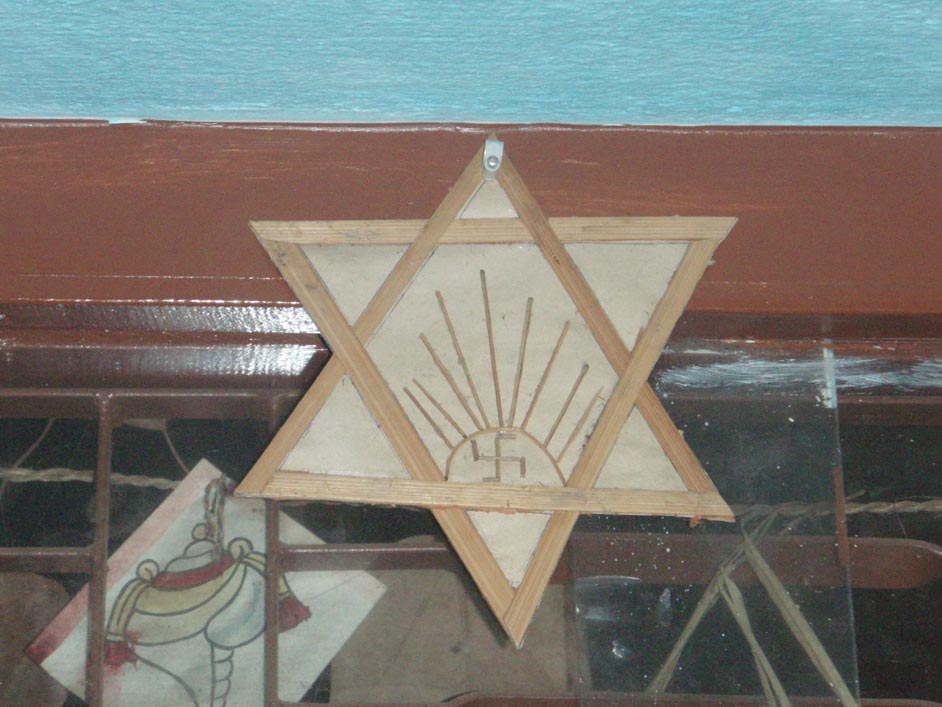
This six pointed star, which in our tradition is the sign of the cults that worship on Saturdays (cult of Saturn), in South Asia represents Saraswati, the goddess of learning and music. The Swastik sign represents continuity (among many other things), and is embedded within it. A rising sun of energetic rays emanate from the Swastik. CULTURAL RELATIVITY if I've ever seen a perfect example.


A waterspout from a spring that is flowing pure, direct from the mouth of Shankar, an incarnation of the Lord of Yogis, Shiva.


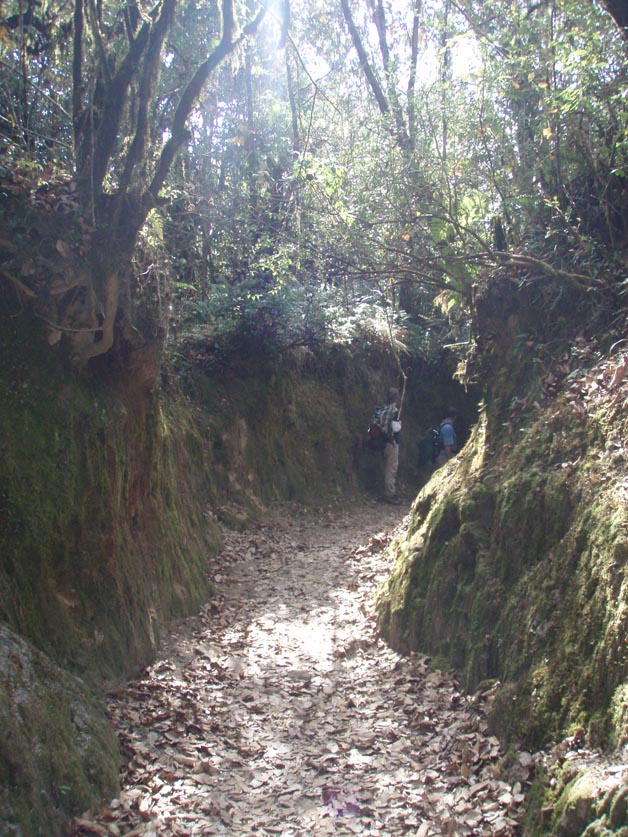
A trail in the Shivapuri National Park, where I went walking for a few days last week with the relations and my buddy Ian. The path snaked through an old wash, the sides of which hung onto tree roots, hanging above our heads at some points.


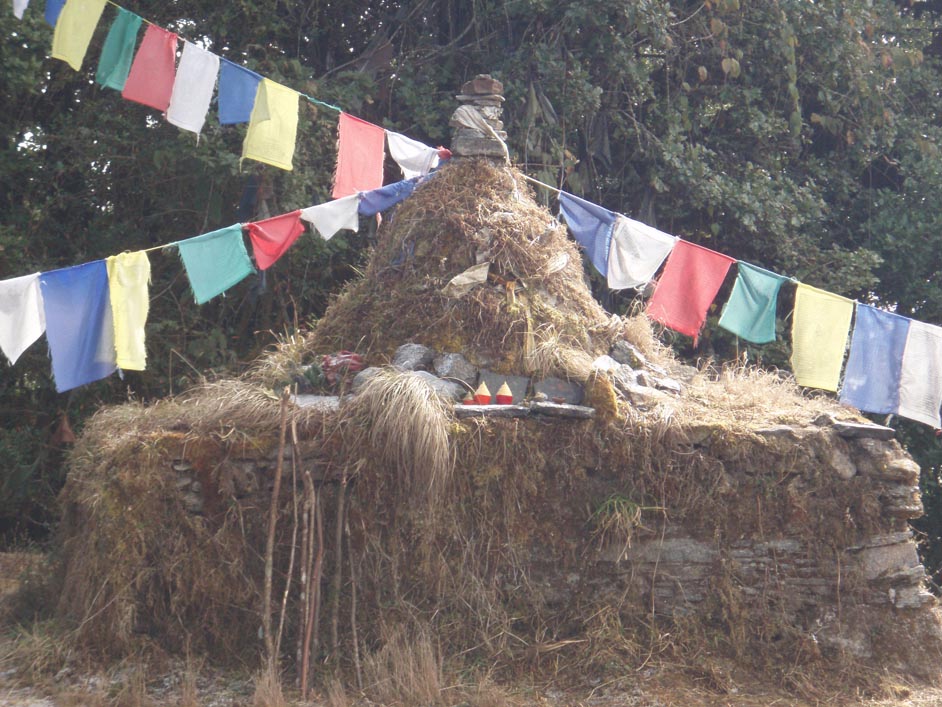
An old Buddhist stupa at the peak of Shivapuri hill (2,700 meters, about 8,000 feet), which marks the highest point of the northern rim of the Kathmandu Valley. While enjoying the sunshine, we met a young hindu yogi, in his early twenties, who had completed one month of meditation in the forest. He is scheduled to spend the next three years living in a cave near the peak, engaged in the pure life. He won't even touch anyone else for the duration.


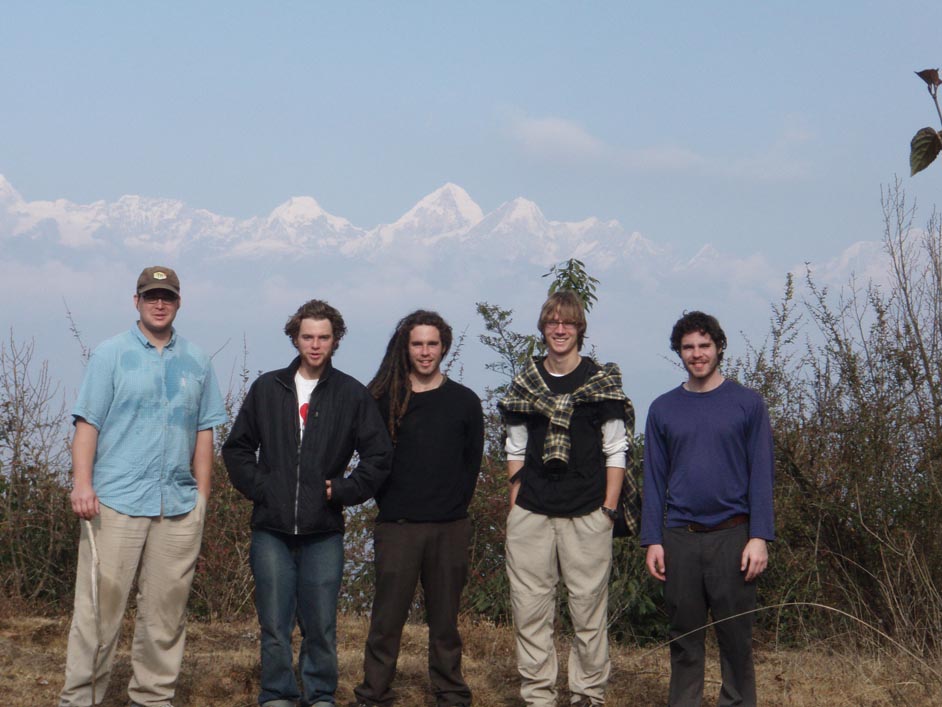
A Himalayan mountain view to the north from the northern rim of the Kathmandu Valley, where I went trekking with the relations last week.


Our group, rambling through the mountains. Check www.khamabiding.blogspot.com for a brief description of our trip.


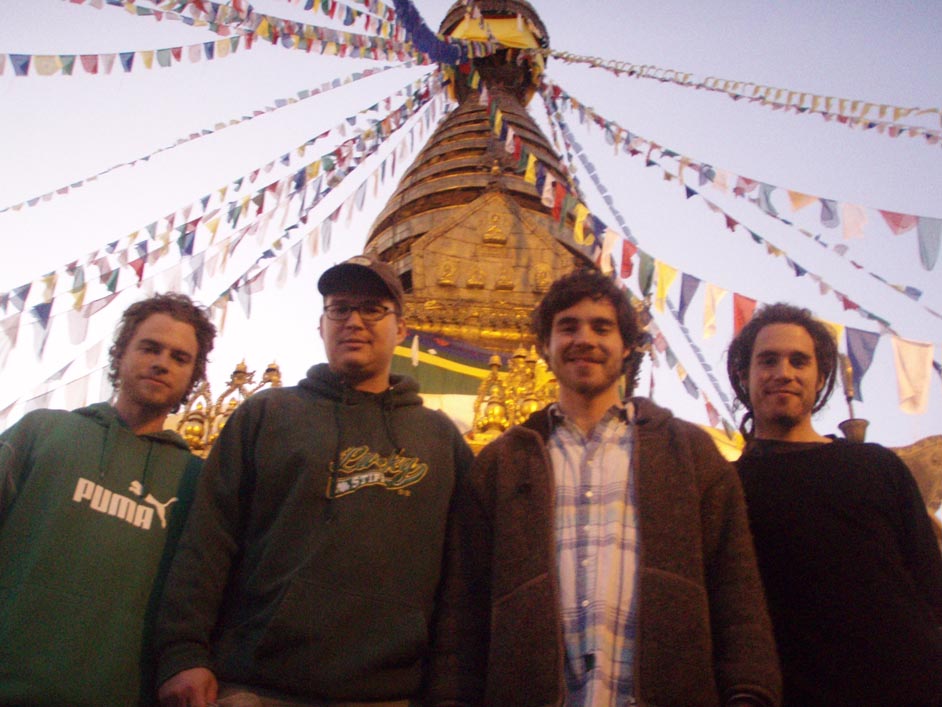
Older brother Chris, cousin Will, twin brother Daniel and I, standing in front of the impressive dome of the Swayambhunath stupa, perched on a hill in western Kathmandu.


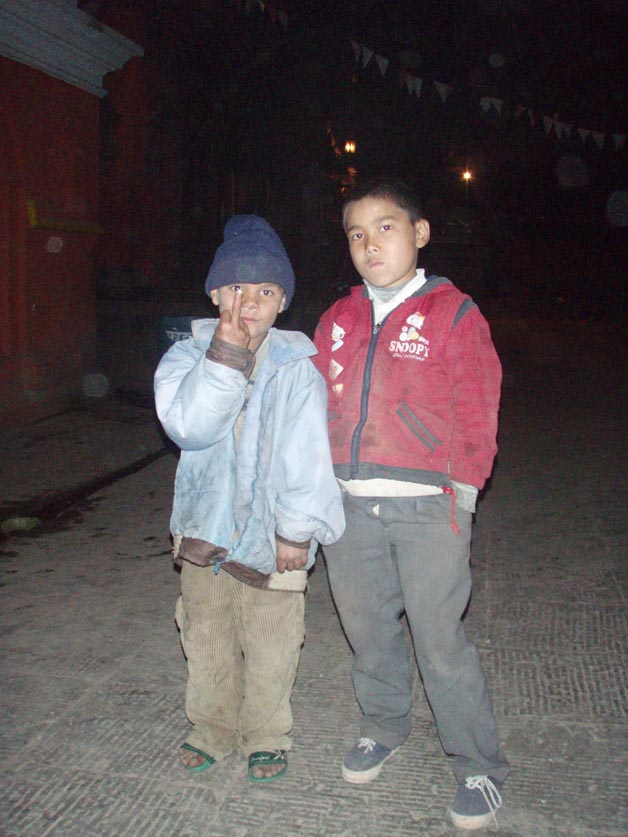
These two little kids asked me to take their photo as we were wandering around the historic part of Patan city last week. Right as I was snapping the photo, one of them quickly shot me the bird. I would have scolded him, but I was laughing way to hard.


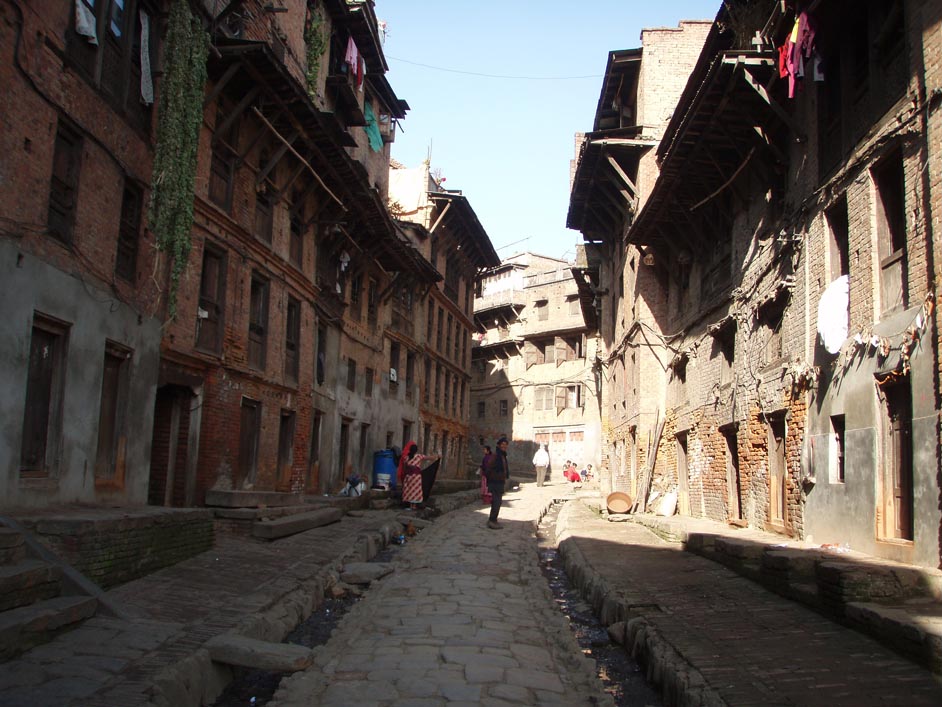
A street in Bhaktapur, the well preserved town in the eastern part of the Kathmandu Valley. The local government heavily subsidizes building the facades of buildings in the old Newari style of intricate brick and woodwork.


Down by the river in Bhaktapur.


The Shreegha stupa, in the middle of a very unique courtyard in Kathmandu, which has a Tibetan monastery, a Theravada (Burmese/Thai) monastery and nunnery, and a few traditional Newar Buddhist temples, and some Hindu temples, all together in the same place, sharing the old sacred space.


A tree, draped heavily with prayer flags, on the hill at Swayambhu.


A delicate local bushy reed made and sold all over Nepal as a hand held broom. The rusty roof of this village home is made of old vegetable oil tins, flattened out and nailed together.


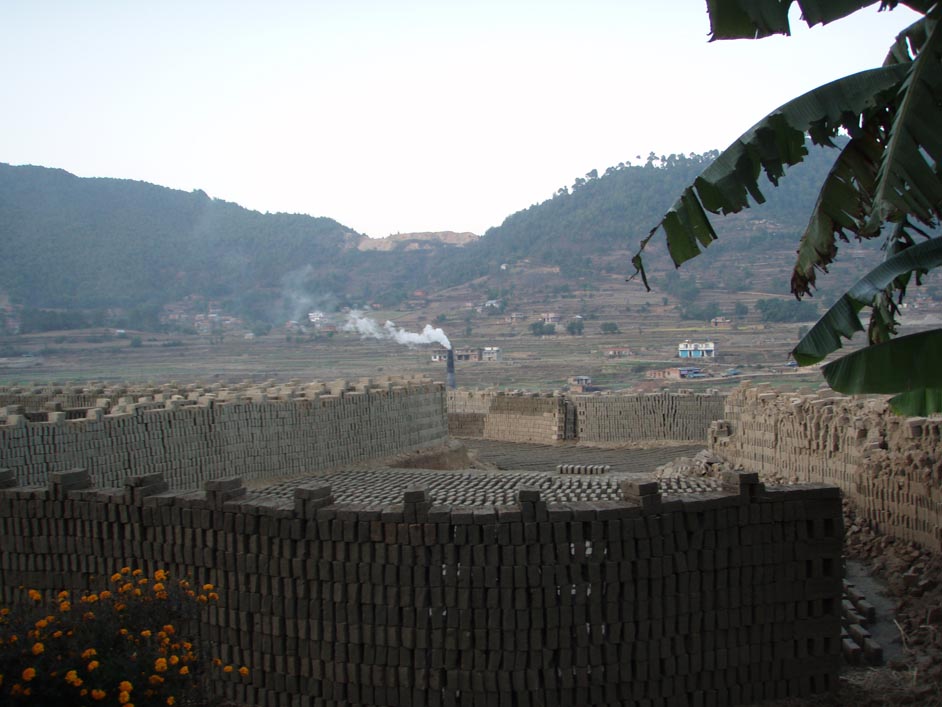
My friend sold the clay heavy dirt from her rice field in front of her house in Lelegoan to the local brick factory, in the distance. There was a failed campaign and protest programme to block the brick factory from being built. The air, once totally pristine, has slowly become more hazy due to the coal burning kilns. It has, however, brought some jobs and money into the rural economy.


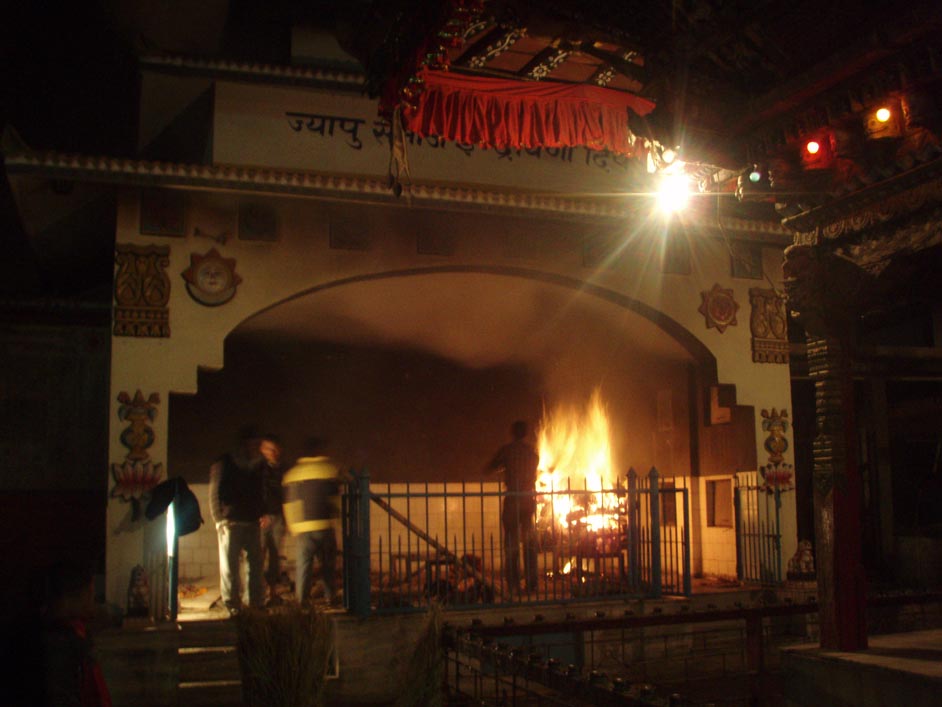
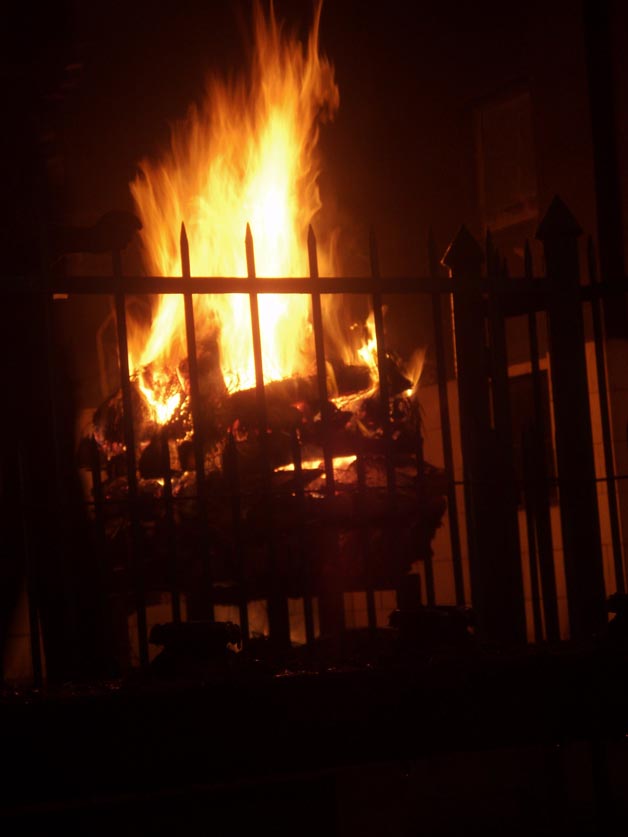
My cousin arrived in Kathmandu last week, and since he had slept a night in Delhi wasn't feeling very jetlagged. Therefore I took him for a walk around the western part of Kathmandu, and after crossing a bridge I realized I had never entered the little temple complex on the banks of that small river. We walked in and were suprised to see a large fire on a platform at the edge of the courtyard, dominated by a goddess temple. There were feet sticking out of the fire, it was a cremation of an old woman.


Five young Nepali girls singing and dancing in Lelegaon village, perched on the southern edge of the Kathmandu Valley. The girls walk around to each house in the village belting local folk tunes in exchange for money and sweets.