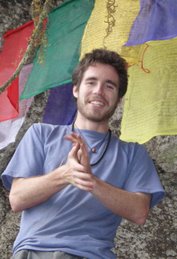
this afternoon i will walk north from our east kathmandu neighborhood into the hills. it won't take but about twenty minutes to be outside of the madness of town, into a village along the road that winds north east up the valley sides. gentle hills give way to mountainside, and after a few hours i will be happily sitting at the Nagi Gompa, a Tibetan Buddhist nunnery for a three day meditation retreat with some of the practitioners from the seminar chris and i attended over the last two weeks, led by the presiding lama, Chokyi Nyima Rinpoche.
i'll be crashing in a tent on the lawn of the monastery, and should have a great view of kathmandu in the valley below. carrying my little tripod so maybe i can get a decent sunset shot of the city, or nighttime lights.
chris is staying in town to continue his tibetan drawing and painting classes, which seem to be giogn well, although i think it is difficult for him to sit cross legged all day the way asians do.
yesterday as i was walking to a shiatsu massage appointment, i met Lama Tsering Wangdu on the circumambulation path around the Boudhanath stupa (by met I mean saw him and stalked him down), said hello, and he replied that I should go to his monastery. After the massage, I walked across the neighborhood down the Boudha road to Tusal, and upon arrival at the gompa (monastery) discovered that he was about to commence a long life empowerment, requested and sponsored by a group of twenty or so Newari women, mostly middle aged and elderly. They have a close connection to Lama Wangdu because he used to live in Jawalakhel at a Tibetan refugee camp near Patan, where many Newar Buddhists live.
The long life empowerment is technically a ritual empowerment or permission to practice the mantra and visualization meditation of Amitayus (Tsepagme), the Buddha of Infinite Life. Once done with the ceremony, the thirty or so local students of Lama Wangdu finished their chod feast offering, and after two plates of delicious rice and lentils with curry vegetables, i walked home to meet chris and watched a cheesy Korean sword action movie.
Off to the hills!
Thursday, November 30, 2006


Wednesday, November 29, 2006
lingering in boudha
Big bro Chris has been well occupied taking some drawing classes in the afternoons with a Tibetan painter friend of mine that also lives in our neighborhood, Boudha. Tomorrow or the next day he will begin as a full time student at the Tsering Art school at the Shechen Monastery here, which has a pretty vigorous traditional routine: 30 minutes of prayer followed by 3 hours of drawing class in the morning, 2 hour lunch nap break, some prayer at 2pm, and 3 hours of painting class in the afternoon. He'll continue this through Jan 10 or so when he leaves Nepal for the Big Easy.
We attended the annual seminar on Buddhist philosophy and practice at the White Monastery in Boudha, I had been looking forward to it greatly and am sad it is over. However, there is a follow up retreat this weekend up in a small hermitage on the rim of the Kathmandu Valley this weekend, I'm going to walk up from our apartment building in Boudha to the hermitage with a sleeping bag and tent (3 hours or so) and walk back, so it'll be kind of like camping. Mostly meditation up there, I went three years ago and it was splendid.
I caught Chris meditating this morning in his room, I'm feeling a bit proud of that, rejoicing in an attempt at recognizing the natural state, or at least calming down a bit.
things are well these days, i've been able to redirect a lot of my fulbright money towards monasteries and nunneries, trying to purify a little of the collective negative karma of the american government and being an american. we have all been complicit in many terrible deeds. (as well as good ones like sending a hopeless spacecadet like myself to hang out with buddhists and try to let something rub off if possible).
"the mind is like a crystal, which takes the color of the fabric that you set it upon. therefore to practice virtue it is necessary to keep virtuous friends dear and distance yourself from those that engage in non-virtue." - Dilgo Khyentse Rinpoche.
We attended the annual seminar on Buddhist philosophy and practice at the White Monastery in Boudha, I had been looking forward to it greatly and am sad it is over. However, there is a follow up retreat this weekend up in a small hermitage on the rim of the Kathmandu Valley this weekend, I'm going to walk up from our apartment building in Boudha to the hermitage with a sleeping bag and tent (3 hours or so) and walk back, so it'll be kind of like camping. Mostly meditation up there, I went three years ago and it was splendid.
I caught Chris meditating this morning in his room, I'm feeling a bit proud of that, rejoicing in an attempt at recognizing the natural state, or at least calming down a bit.
things are well these days, i've been able to redirect a lot of my fulbright money towards monasteries and nunneries, trying to purify a little of the collective negative karma of the american government and being an american. we have all been complicit in many terrible deeds. (as well as good ones like sending a hopeless spacecadet like myself to hang out with buddhists and try to let something rub off if possible).
"the mind is like a crystal, which takes the color of the fabric that you set it upon. therefore to practice virtue it is necessary to keep virtuous friends dear and distance yourself from those that engage in non-virtue." - Dilgo Khyentse Rinpoche.
Wednesday, November 15, 2006

working on the computer with little monks everywhere getting into my stuff and having a blast. they love to sit with me and watch me type or upload photos or translate, which is how i spend a lot of my afternoon unless i'm bouncing around kathmandu or the countryside on my motorcylce to meet someone or entertain or be entertained.

the spiritual epicenter of the neighborhood where big brother chris will be spending the next two months, the bodhanath stupa, the largest buddhist monument in nepal and one of the largest (and oldest of its type) in asia. VIBIN'.

i let some of the little ones take my digital camera (i got this model because of its durability and shockproofness) and run around taking photos of each other. this is one of the particularly cute ones (that was actually in focus) that came out.
back in the shitty
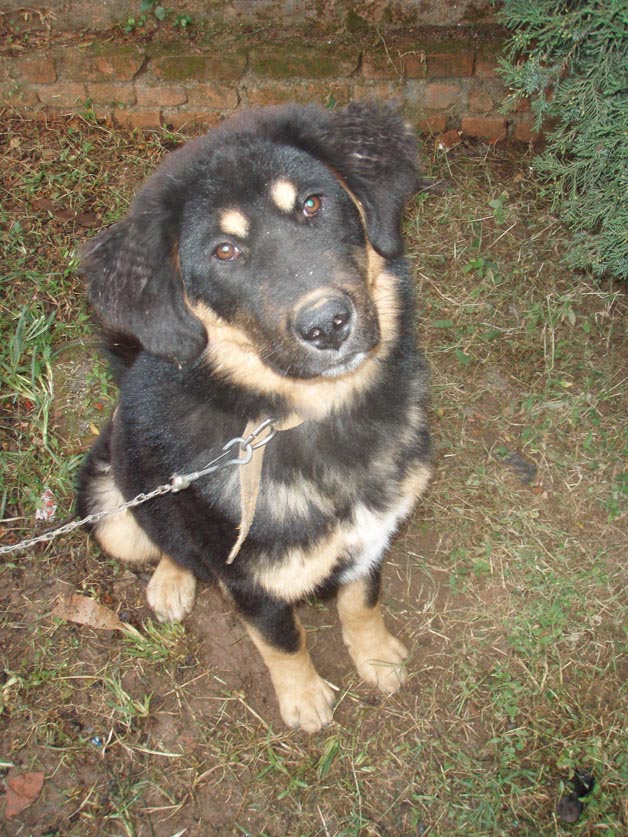
one of our ferocious guarddogs at the monastery in Chapagaon, Gonpo [protector] is the absolute friendliest cutest Tibetan mastiff I've ever met, he loves scratches on the tummy, like all puppies.
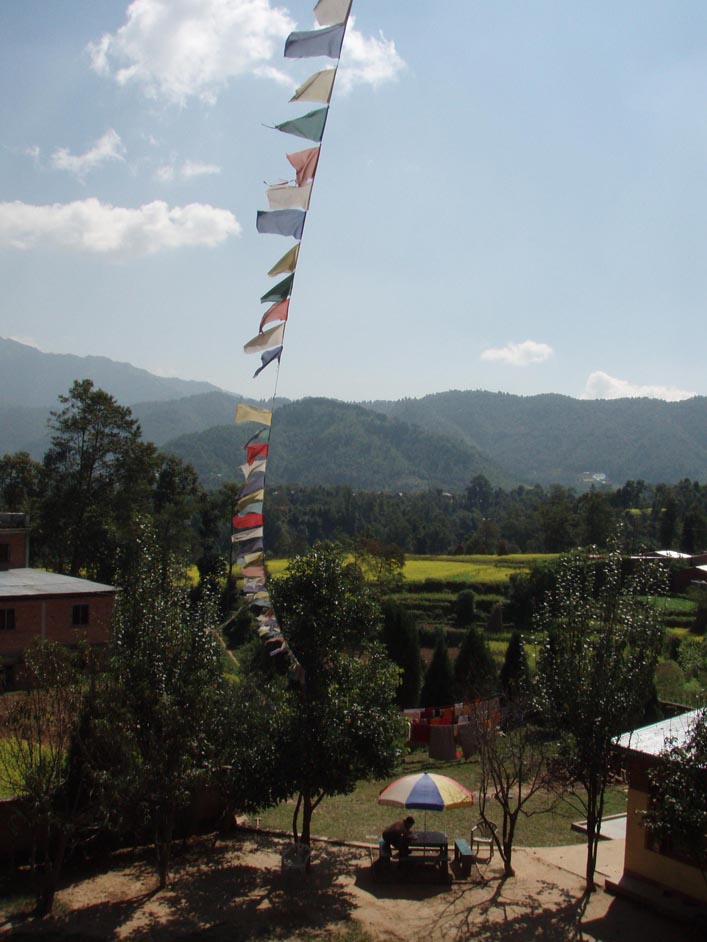
a veiw to the southeast from the window of the monastery in chapagaon.
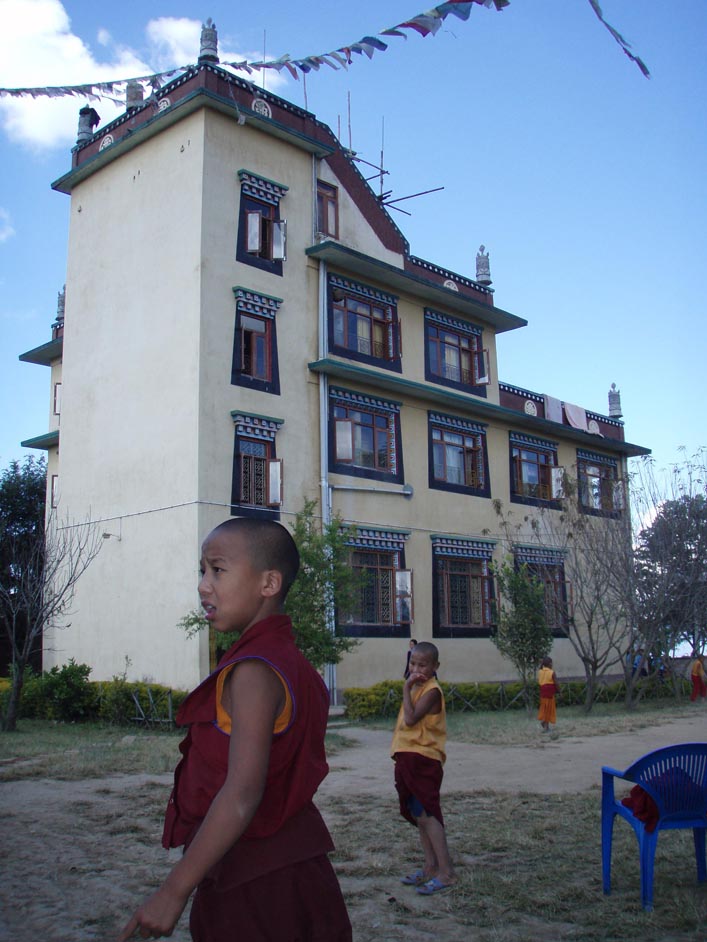
some of the young monks hanging out in the sun outside the monastery on Sunday, which is a day of play for them. after all, most of the monks that i live with are about 12 years old.
older brother chris arrived in kathmandu a few days ago, although his bags remained in thailand enjoying the beaches and fruit cocktails for a few extra days without him. Despite the hassle, we managed to get the luggage and spent his first three days in chapagaon at the monastery where i have been studying, and then for a day in the even smaller village of lelegaon hiking around in the beautiful hills outside of kathmandu.
Wednesday, November 08, 2006
finally some little bit of internet
no posts for a while, internet connection has been spotty. i came into kathmandu to stay for a few days at a monastery populated by newars in a newari neighborhood in patan (Okubahal), and have been making some useful observations and getting a lot of good secondary info out of the library there.
older brother chris comes in two days. i'm going to bring him up to the village chapagaon to stay with me a few days, to sleep and check out little farms and ride around the countryside. a good introduction.
i started translating phadampa sangye's biography, although i haven't really looked at any tibetan the last three days as i've been staying with the newars at the padmavarna mahayan vihar. there is one old newari lama there, 93 years old, and i have been able to chill with him in the mornings a bit. he just kicks it reciting prayers and mantras under his breath all the time, blessing some things, talking to people, walking in the sunshine at times. he's got some real accomplishment i can feel (the only way to really know that), and advised me to continue practicing, surely i will have some accomplishment (ngonshe) as well.
i also read a bit out of a small biography of dilgo khyentse rinpoche last night which made me cry. he spent almost all of his teens and early twenties in retreat sitting in the woods in a meditation box praying and meditating all the time. at twenty three he was ready to go into life retreat! he didn't for the sake of us, though. his mere picture brings a peircing feeling to my heart. gyab su chi!
will post more with pictures next week when i get a better connection. i have many photos now to share!
older brother chris comes in two days. i'm going to bring him up to the village chapagaon to stay with me a few days, to sleep and check out little farms and ride around the countryside. a good introduction.
i started translating phadampa sangye's biography, although i haven't really looked at any tibetan the last three days as i've been staying with the newars at the padmavarna mahayan vihar. there is one old newari lama there, 93 years old, and i have been able to chill with him in the mornings a bit. he just kicks it reciting prayers and mantras under his breath all the time, blessing some things, talking to people, walking in the sunshine at times. he's got some real accomplishment i can feel (the only way to really know that), and advised me to continue practicing, surely i will have some accomplishment (ngonshe) as well.
i also read a bit out of a small biography of dilgo khyentse rinpoche last night which made me cry. he spent almost all of his teens and early twenties in retreat sitting in the woods in a meditation box praying and meditating all the time. at twenty three he was ready to go into life retreat! he didn't for the sake of us, though. his mere picture brings a peircing feeling to my heart. gyab su chi!
will post more with pictures next week when i get a better connection. i have many photos now to share!
Thursday, October 19, 2006
making connections
yesterday a monk from a monastery in patan (south kathmandu) accompanied one of the monks that i live with in chapagaon to our monastery, and i discovered that he was a newar who lived with a few other newars ordained in the tibetan tradition in a monastery that is converted from the old style newari monasteries (bahal). i offered him a ride back on my hog (indian bullet 350cc royal enfield motorcyle), he accepted and i ended up staying last night at the monastery, the padmavarna mahayan gompa. they have a decent little library, totally disorganized, with their own liturgical materials as well as writings on buddhism in nepali, english, hindi, tibetan, sanskrit and newari. i found about thirty publications in english that i can use directly or indirectly for my research, and the venerable old lama, who is 92, seems to have a lot of freetime and is very willing to sit and chat. i think i may collect some stories from him, at least create a biographical sketch, because he has been a practicing mahayana/vajrayana tibetan style buddhist monk for fifty years, crucial to the dissimination of the kargyud nyingma dharma to newars.
this is also quite funny and sad at the same time:
Rick Santorum and the "Eye of Mordor"
In an interview with the editorial board of the Bucks County Courier
Times, embattled Pennsylvania Sen. Rick Santorum has equated the war
in Iraq with J.R.R. Tolkien's "Lord of the Rings." According to the
paper, Santorum said that the United States has avoided terrorist
attacks at home over the past five years because the "Eye of Mordor"
has been focused on Iraq instead.
"As the hobbits are going up Mount Doom, the Eye of Mordor is being
drawn somewhere else," Santorum said. "It's being drawn to Iraq and
it's not being drawn to the U.S. You know what? I want to keep it on
Iraq. I don't want the Eye to come back here to the United States."
We're sure that we wouldn't either, if only we had the slightest idea
of what Santorum was saying. The Courier Times translates for those of
us who are not so conversant in spooky Tolkienese: The "Eye of
Mordor," it seems, was "the tool the evil Lord Sauron used in search
of the magical ring that would consolidate his power over
Middle-earth."
To be fair, Santorum's interview with the editorial board wasn't all
about fantasy. Well, at least not the Dungeons and Dragons kind.
Santorum said that he disagreed with the notion that the United States
is "bogged down" in Iraq. As for talk of a troop withdrawal? Santorum
said: "I don't think you ask that question. I know that's the question
everybody wants to ask. But I don't think anyone would ask that
question in 1944, 'Gee, how long are we going to be in Europe?' We're
going to be in Europe until we win."
this is also quite funny and sad at the same time:
Rick Santorum and the "Eye of Mordor"
In an interview with the editorial board of the Bucks County Courier
Times, embattled Pennsylvania Sen. Rick Santorum has equated the war
in Iraq with J.R.R. Tolkien's "Lord of the Rings." According to the
paper, Santorum said that the United States has avoided terrorist
attacks at home over the past five years because the "Eye of Mordor"
has been focused on Iraq instead.
"As the hobbits are going up Mount Doom, the Eye of Mordor is being
drawn somewhere else," Santorum said. "It's being drawn to Iraq and
it's not being drawn to the U.S. You know what? I want to keep it on
Iraq. I don't want the Eye to come back here to the United States."
We're sure that we wouldn't either, if only we had the slightest idea
of what Santorum was saying. The Courier Times translates for those of
us who are not so conversant in spooky Tolkienese: The "Eye of
Mordor," it seems, was "the tool the evil Lord Sauron used in search
of the magical ring that would consolidate his power over
Middle-earth."
To be fair, Santorum's interview with the editorial board wasn't all
about fantasy. Well, at least not the Dungeons and Dragons kind.
Santorum said that he disagreed with the notion that the United States
is "bogged down" in Iraq. As for talk of a troop withdrawal? Santorum
said: "I don't think you ask that question. I know that's the question
everybody wants to ask. But I don't think anyone would ask that
question in 1944, 'Gee, how long are we going to be in Europe?' We're
going to be in Europe until we win."
Saturday, October 07, 2006
my first month report
This morning I sent the following email to Peter Moran, the fulbright director in Nepal, as my first month report on what I have and have not been doing with the governments money in September:
The first weeks of September felt a bit unproductive; I think it was because I had been itching to get into the monastery in Chapagaon but kept coming up with reasons not to make the move, and my own procrastination was annoying me. My twin brother came to Kathmandu with me overland from India, and an India Fulbrighter that we met in Dharamsala stayed with us in Boudha a few days, so I was involved with entertaining them, showing them various places in Kathmandu and introducing them to friends and lamas. The Fulbrighter from India had some interesting contacts, we visited a student political organization that gave us a unique view of the JanAndolan 2, it was eye opening, but I had the nagging feeling I wasn't getting anything done for my "project."
I did, however, complete two full edits with the help of my twin of a past project I have been gradually working on, which is a compilation of stories about the Phadrugpa lama the Khari Rinpoche. One day I plan on publishing it with Bidur's Vajra books in Thamel, he and I have talked about the text a few times, but there is a lot more fact checking and background research to do on it and I'm committed to other things right now, so I've put it on the backburner for this year.
Anyway, Ian and I have been continuing to make the commute either from Boudha or Chapagaon to Tony Duff's house outside of the ring road from Swayambhu, I took 7 Tibetan pronunciation classes with him, then we moved to grammar, reading through Thonmi Sambhota's root text on grammar (the gsum ju pa) for 4 or 5 sessions, and finally we've settled on Pema Karbo's bit by bit commentary ('gru 'grel) to the Bodhisatvacaryavatara for translation practice classes. This has been quite challenging (especially the poetry at the beginning), but Tony really knows his Tibetan and my classical is showing marked improvement.
I make that judgement based on the other Tibetan text I've been translating, a Khampa lama's bit by bit commentary ('gru 'grel) on the liturgy for the preliminary practices of the Heart Essence of the Vast Expanse (klong chen snying tig sngon 'gro), which, after a year of construction work and not looking at Tibetan at all, is slowly getting easier to read and spot translate. This textual work is peripherally related to my project, because many of the Nyingma Lamas in Kathmandu that are popular amongst Newars teach out of texts like the Words of My Perfect Teacher (Kun bZang bLa ma'i She Lung), which is also essentially a commentary on the Heart Essence, and other similar texts introducing the path to tantra and Dzogchen, in fact even in the thirties a visiting Tibetan lama that gave public teachings to thousands of Newars taught from the Shelung as well.
For the same academic reasons, but also for much more personal ones, I have also been doing sgnon 'gro myself for almost three years (obviously not so diligently). Academically speaking, I've found that many teachers and practitioners become quite reticent when talking about tantra unless you are a practitioner, and many aspects of the path are incomprehensible without some direct experience into the subject material, so I've been using my mornings in Chapgaon for practice. I don't see a huge disconnect between my "research" and my "practice," because they are informing each other; inevitably I talk to people about their teachers and teachings, without some personal understanding I just wouldn't know what they are on about.
I had been fantasizing while building houses in New Orleans about a quiet conducive atmosphere to finish the preliminary practices, and the Chapagaon Gompa has turned out to be that place I wished it would be. For that reason, I am most grateful to the Fulbright institution for helping me slowly break through some of the barriers for discovering my own mind.
I have been in Chapagaon for about two and a half weeks now, and besides trying to practice, I've been playing soccer with the monks, helping them with English, speaking to everyone in the mixture of Tibetan and Nepali that they use, watching some Hindi and Nepali television with the monks, eating dal bhat twice daily, spelling Tibetan aloud, working on my translations, reading and hanging out. The other day I realized how multilingual my life has become. After returning from Newari class and trying to say goodnight to the Gatekeeper in Newari, I climbed upstairs and watched some Hindi TV with the monks, the lay Tibtetan teacher and the Nepali (Tamang) cook. The Tibetans speak Tibetan to each other, they speak Nepali with the cook, and as we watched Hindi TV (my Hindi is OK actually, and the television has been a great way for me to keep up those skills) explained some aspects of the plot and characters to me in Nepali and Tibetan.
I've had three Newari classes, my teacher is a very friendly Newar Theravada Buddhist lay male named Rameshwar that lives about 5 minutes from the Gompa, next to the cooperative school shere he is the principal. His English and understanding of grammar is good. He conducts the class in Nepali, actually, filling in what I don't grasp in English, so it is actually functioning as an intro Newari class and an intermediate Nepali class at the same time. The colloquial grammar format of Newari mirrors that of Tibetan and there are many cognate words between Newari and Tibetan, but the sounds of the language will take some real practice for my western mouth. It has proved challenging, but I love learning languages so the classes are stimulating but tiring. The Newar gatekeeper at the Gompa already is speaking to me in Newari, although after a few tries switches to Nepali because he can tell i don't understand.
As far as books go, this month I've read and taken notes on a good bit of Gellner's Monk Householder Tantric Priest and the collection of essays on the Newars, Contested Hierarchies. I also finished reading Paramahansa Yogananda's Autobiography of a Yogi as leisure reading, which was a very inspiring account of a truly dedicated bhaktiyogin.
I have, however, been slacking off on taking notes about my location, the people I talk to, the monks' routines and the variety of things we talk about, etc. That is the biggest change I hope to make this month, to start a decent fieldnotebook on my computer so I have something original to draw on in the future, as my memory isn't that great.
I have some fantasies about writing an article this year to have ready by May or so.
The motorbike, after some original difficulty with parts and lack of skill, has become a pleasure to drive around Kathmandu, and is saving me time.
The first weeks of September felt a bit unproductive; I think it was because I had been itching to get into the monastery in Chapagaon but kept coming up with reasons not to make the move, and my own procrastination was annoying me. My twin brother came to Kathmandu with me overland from India, and an India Fulbrighter that we met in Dharamsala stayed with us in Boudha a few days, so I was involved with entertaining them, showing them various places in Kathmandu and introducing them to friends and lamas. The Fulbrighter from India had some interesting contacts, we visited a student political organization that gave us a unique view of the JanAndolan 2, it was eye opening, but I had the nagging feeling I wasn't getting anything done for my "project."
I did, however, complete two full edits with the help of my twin of a past project I have been gradually working on, which is a compilation of stories about the Phadrugpa lama the Khari Rinpoche. One day I plan on publishing it with Bidur's Vajra books in Thamel, he and I have talked about the text a few times, but there is a lot more fact checking and background research to do on it and I'm committed to other things right now, so I've put it on the backburner for this year.
Anyway, Ian and I have been continuing to make the commute either from Boudha or Chapagaon to Tony Duff's house outside of the ring road from Swayambhu, I took 7 Tibetan pronunciation classes with him, then we moved to grammar, reading through Thonmi Sambhota's root text on grammar (the gsum ju pa) for 4 or 5 sessions, and finally we've settled on Pema Karbo's bit by bit commentary ('gru 'grel) to the Bodhisatvacaryavatara for translation practice classes. This has been quite challenging (especially the poetry at the beginning), but Tony really knows his Tibetan and my classical is showing marked improvement.
I make that judgement based on the other Tibetan text I've been translating, a Khampa lama's bit by bit commentary ('gru 'grel) on the liturgy for the preliminary practices of the Heart Essence of the Vast Expanse (klong chen snying tig sngon 'gro), which, after a year of construction work and not looking at Tibetan at all, is slowly getting easier to read and spot translate. This textual work is peripherally related to my project, because many of the Nyingma Lamas in Kathmandu that are popular amongst Newars teach out of texts like the Words of My Perfect Teacher (Kun bZang bLa ma'i She Lung), which is also essentially a commentary on the Heart Essence, and other similar texts introducing the path to tantra and Dzogchen, in fact even in the thirties a visiting Tibetan lama that gave public teachings to thousands of Newars taught from the Shelung as well.
For the same academic reasons, but also for much more personal ones, I have also been doing sgnon 'gro myself for almost three years (obviously not so diligently). Academically speaking, I've found that many teachers and practitioners become quite reticent when talking about tantra unless you are a practitioner, and many aspects of the path are incomprehensible without some direct experience into the subject material, so I've been using my mornings in Chapgaon for practice. I don't see a huge disconnect between my "research" and my "practice," because they are informing each other; inevitably I talk to people about their teachers and teachings, without some personal understanding I just wouldn't know what they are on about.
I had been fantasizing while building houses in New Orleans about a quiet conducive atmosphere to finish the preliminary practices, and the Chapagaon Gompa has turned out to be that place I wished it would be. For that reason, I am most grateful to the Fulbright institution for helping me slowly break through some of the barriers for discovering my own mind.
I have been in Chapagaon for about two and a half weeks now, and besides trying to practice, I've been playing soccer with the monks, helping them with English, speaking to everyone in the mixture of Tibetan and Nepali that they use, watching some Hindi and Nepali television with the monks, eating dal bhat twice daily, spelling Tibetan aloud, working on my translations, reading and hanging out. The other day I realized how multilingual my life has become. After returning from Newari class and trying to say goodnight to the Gatekeeper in Newari, I climbed upstairs and watched some Hindi TV with the monks, the lay Tibtetan teacher and the Nepali (Tamang) cook. The Tibetans speak Tibetan to each other, they speak Nepali with the cook, and as we watched Hindi TV (my Hindi is OK actually, and the television has been a great way for me to keep up those skills) explained some aspects of the plot and characters to me in Nepali and Tibetan.
I've had three Newari classes, my teacher is a very friendly Newar Theravada Buddhist lay male named Rameshwar that lives about 5 minutes from the Gompa, next to the cooperative school shere he is the principal. His English and understanding of grammar is good. He conducts the class in Nepali, actually, filling in what I don't grasp in English, so it is actually functioning as an intro Newari class and an intermediate Nepali class at the same time. The colloquial grammar format of Newari mirrors that of Tibetan and there are many cognate words between Newari and Tibetan, but the sounds of the language will take some real practice for my western mouth. It has proved challenging, but I love learning languages so the classes are stimulating but tiring. The Newar gatekeeper at the Gompa already is speaking to me in Newari, although after a few tries switches to Nepali because he can tell i don't understand.
As far as books go, this month I've read and taken notes on a good bit of Gellner's Monk Householder Tantric Priest and the collection of essays on the Newars, Contested Hierarchies. I also finished reading Paramahansa Yogananda's Autobiography of a Yogi as leisure reading, which was a very inspiring account of a truly dedicated bhaktiyogin.
I have, however, been slacking off on taking notes about my location, the people I talk to, the monks' routines and the variety of things we talk about, etc. That is the biggest change I hope to make this month, to start a decent fieldnotebook on my computer so I have something original to draw on in the future, as my memory isn't that great.
I have some fantasies about writing an article this year to have ready by May or so.
The motorbike, after some original difficulty with parts and lack of skill, has become a pleasure to drive around Kathmandu, and is saving me time.
Monday, September 25, 2006
Summer Tibet trip pictures
Some photos from the trip I led in central Tibet this summer with five American college students. We flew from Kathmandu Nepal to Lhasa Tibet and took a Landcruiser back through the plateau, over a Himalayan pass, and back down to Kathmandu.
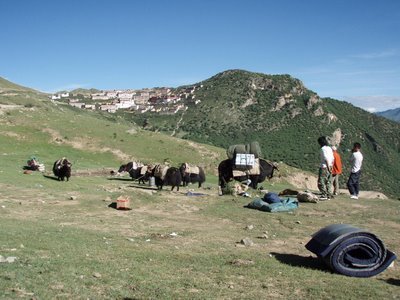 Some yaks with their herders, next to the road that leads to the stunningly located Ganden monastery (in the background), where Tsongkhapa started the monastic reform in tibet that lead to the creation of the gelugpa tradition, the school of the Dalai Lama.
 Here is a black nomad tent, made from woven yak wool. Some yaks are grazing nearby. I took this photo on the road to Namtso, Sky Lake, one of the biggest lakes in China, and also one of the highest lake in the world. It is at about 19,000 feet above sea level, over 4000 feet above the highest peak in Colorado!
 Some kind Tibetan ladies we made friends with near Namtso, the Sky Lake. They had traveled from Derge, Kham, Tibet in order to make pilgrimage around central Tibet. They sold bracelets and necklaces to make ends meet. They had the students and I over to their tiny dirt floored tent (really just a tarp strung over a central wooden pole) for salty buttery Tibetan tea and tsampa (roasted barley flour prepared as porridge or a dough). They gave me some prayerbeads, as they noticed my inclination for such things.
 The breathtaking Sky Lake during a clear morning. The stars the previous night were amazing, I've only seen them clearer camping in the boulder field below Long's peak in Rocky Mountain Park in Colorado. It is as if the whole sky is awash in silvery threads.
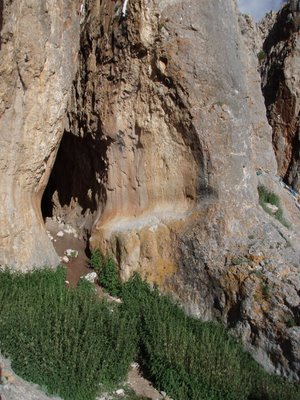 A cave near the banks of Namtso, with two entrances and a great high ceiling. Good for bouldering or rock climbing, better for meditation! Stinging nettles grow in abundance at the entrance, which were the favorite food of the great eleventh century Tibetan yogi poet Milarepa. He lived on them alone for many years as he practiced in seclusion in the mountains. What a great cave, plenty of water, sunshine and food!
GO SAINTS!!! The Saints tickets are sold out for the season, something that has never happened before. Maybe God has taken the whole "when the saints come marching in" after the apocalypse to heart this year.
Some of you may have read today about a tragic plane crash in Nepal, that left no survivors. The plane had a handful of extremely talented and affective World Wildlife Federation and USAID, etc. workers. A huge loss for conservation and sustainable development efforts in Nepal. I had the opportunity to meet the US Ambassador to Nepal last night at a reception for this year's Fulbrighters. He lost some friends in the crash, it was a somber mood. I did, however, meet some nice Newar Buddhists who invited me over to their houses, I can talk to them about my project and gain insight and perspective, yay!
LET IT BE A REMINDER TO ALL OF US THAT DEATH CAN COME AT ANY TIME, ALL ASPECTS OF OUR EXPERIENCE ARE IMPERMANENT, DON'T WASTE A MOMENT OF YOUR PRECIOUS HUMAN LIFE!
I also moved into the monastery in Chapagaon on Thursday and am continuously amazed at this amazing opportunity I've been given for quiet study, meditation and reflection. The 30 young monks there are quickly warming up to my presence, and hopefully soon my new camera will come in the mail so I can post pictures of the village and my new robed friends.
 Some yaks with their herders, next to the road that leads to the stunningly located Ganden monastery (in the background), where Tsongkhapa started the monastic reform in tibet that lead to the creation of the gelugpa tradition, the school of the Dalai Lama.
 Here is a black nomad tent, made from woven yak wool. Some yaks are grazing nearby. I took this photo on the road to Namtso, Sky Lake, one of the biggest lakes in China, and also one of the highest lake in the world. It is at about 19,000 feet above sea level, over 4000 feet above the highest peak in Colorado!
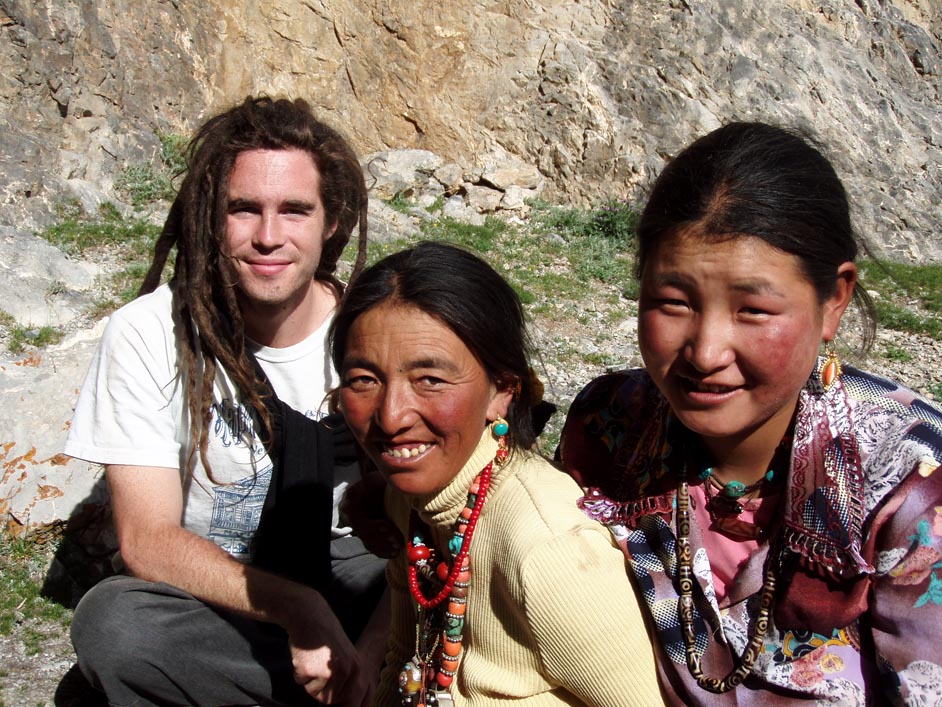 Some kind Tibetan ladies we made friends with near Namtso, the Sky Lake. They had traveled from Derge, Kham, Tibet in order to make pilgrimage around central Tibet. They sold bracelets and necklaces to make ends meet. They had the students and I over to their tiny dirt floored tent (really just a tarp strung over a central wooden pole) for salty buttery Tibetan tea and tsampa (roasted barley flour prepared as porridge or a dough). They gave me some prayerbeads, as they noticed my inclination for such things.
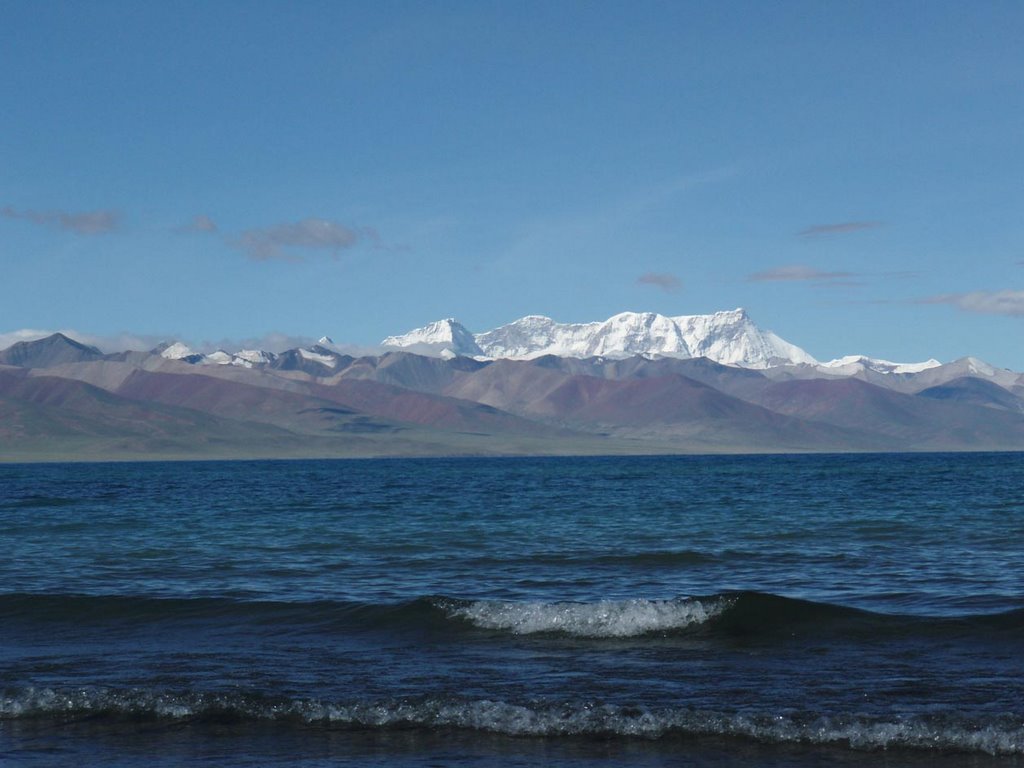 The breathtaking Sky Lake during a clear morning. The stars the previous night were amazing, I've only seen them clearer camping in the boulder field below Long's peak in Rocky Mountain Park in Colorado. It is as if the whole sky is awash in silvery threads.
  A cave near the banks of Namtso, with two entrances and a great high ceiling. Good for bouldering or rock climbing, better for meditation! Stinging nettles grow in abundance at the entrance, which were the favorite food of the great eleventh century Tibetan yogi poet Milarepa. He lived on them alone for many years as he practiced in seclusion in the mountains. What a great cave, plenty of water, sunshine and food!
 GO SAINTS!!! The Saints tickets are sold out for the season, something that has never happened before. Maybe God has taken the whole "when the saints come marching in" after the apocalypse to heart this year.
Some of you may have read today about a tragic plane crash in Nepal, that left no survivors. The plane had a handful of extremely talented and affective World Wildlife Federation and USAID, etc. workers. A huge loss for conservation and sustainable development efforts in Nepal. I had the opportunity to meet the US Ambassador to Nepal last night at a reception for this year's Fulbrighters. He lost some friends in the crash, it was a somber mood. I did, however, meet some nice Newar Buddhists who invited me over to their houses, I can talk to them about my project and gain insight and perspective, yay!
LET IT BE A REMINDER TO ALL OF US THAT DEATH CAN COME AT ANY TIME, ALL ASPECTS OF OUR EXPERIENCE ARE IMPERMANENT, DON'T WASTE A MOMENT OF YOUR PRECIOUS HUMAN LIFE!
I also moved into the monastery in Chapagaon on Thursday and am continuously amazed at this amazing opportunity I've been given for quiet study, meditation and reflection. The 30 young monks there are quickly warming up to my presence, and hopefully soon my new camera will come in the mail so I can post pictures of the village and my new robed friends.
Wednesday, September 20, 2006
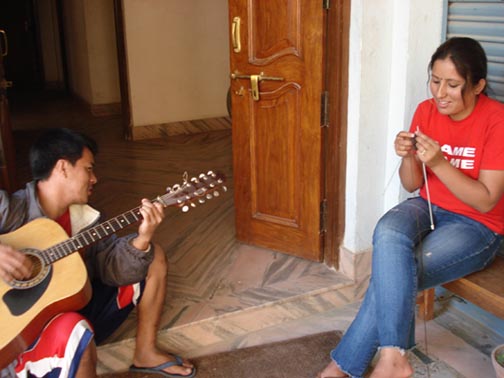 My Nepali friends Shyam with his guitar and Santoshi.
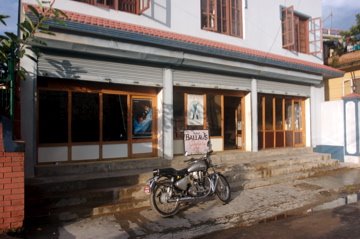 The front of Ram's DVD rental shop. I stayed upstairs with Shuchin last summer and a while this summer, but due to overbooking, I've been crashing in Ram's room the last few weeks. I'm completing my move out, though, and am excited to finally get to Chapagaon. Still waiting on the motorbike repairs to be finished at the shop.
 The inside of the best DVD rental shop in Kathmandu, with a suprising selection of French New Wave, Kirasawa, Buddhist films, Hollywood and Indie pictures.
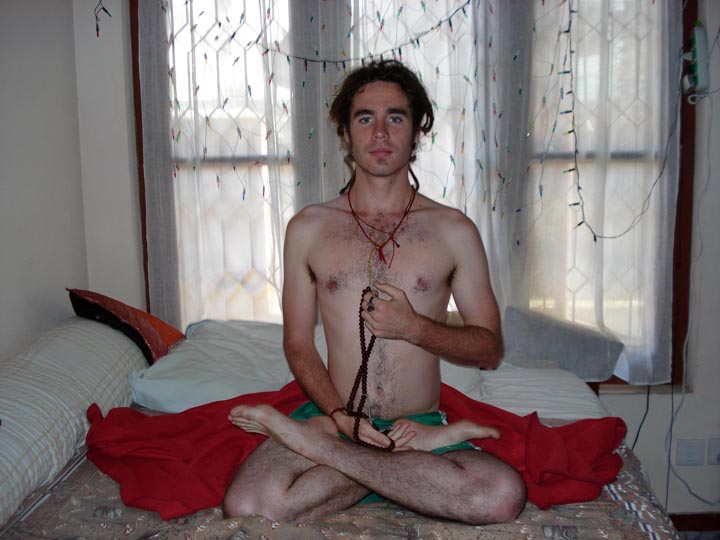 A rather pretentious photo of me during morning mental calistenics. Daily practice makes all the difference.
Sunday, September 17, 2006
social lubrication
Last night, after a great dinner with the fellow Fulbright scholars and researchers at the Russian-Newari restaurant in Naxal, I accompanied five of my colleagues to the palacial Shankar Hotel in Kathmandu for a "Bollywood Party." We were suprised to find that it was basically an expat only party, at least 90% of the people there were white. One of the great things about the restaurant we ate at is the unlimited rakshi, Nepali rice liquor. Since I quit the bottle for this year, I abstained, and realized that the dance party was the first I'd been to stone cold sober since I was in highschool. My friends thought the scene was quite strange, a completely western style party in the heart of Kathmandu, and I could only agree, but I wasn't really thrown off by it as they seemed. Which is also kind of ironic, considering they were the ones well lubricated by the rakshi.
I spent about an hour dancing to various Hindi songs, with about the same rhythmic imagination as your average pop. I was amazed to find that after so much boogying in New Orleans after this year, that my self-consciousness about dancing has much declined, and that I didn't need a few before I could shake my ass; it came naturally.
Phakchok Rinpoche says that calm-abiding meditation on a cushion is easy and unimpressive, he'd like to see real one-pointed concentration while in the danceclubs and bars. I feel like there is a connection between that sentiment and being able to enjoy a danceparty sober, I had a good time, although the temptation to imbibe was there at times. Good dancing takes a certain amount of release of ego fixation (self conscious rattle in the brain, limiting the feet from moving in time), concentration and total relaxation. The less you think about the moves the better.
"Tighten with tightness, then loosen with looseness." Relax into the concentrated state, just be yourself, right?
This week off to Chapagaon. Tomorrow morning I'm driving Ian (the other Buddhist studies fulbright scholar from Rice in Nepal) and myself on the motorcycle to the Fulbright office in town. My first real driving challenge! Should be difficult...
I spent about an hour dancing to various Hindi songs, with about the same rhythmic imagination as your average pop. I was amazed to find that after so much boogying in New Orleans after this year, that my self-consciousness about dancing has much declined, and that I didn't need a few before I could shake my ass; it came naturally.
Phakchok Rinpoche says that calm-abiding meditation on a cushion is easy and unimpressive, he'd like to see real one-pointed concentration while in the danceclubs and bars. I feel like there is a connection between that sentiment and being able to enjoy a danceparty sober, I had a good time, although the temptation to imbibe was there at times. Good dancing takes a certain amount of release of ego fixation (self conscious rattle in the brain, limiting the feet from moving in time), concentration and total relaxation. The less you think about the moves the better.
"Tighten with tightness, then loosen with looseness." Relax into the concentrated state, just be yourself, right?
This week off to Chapagaon. Tomorrow morning I'm driving Ian (the other Buddhist studies fulbright scholar from Rice in Nepal) and myself on the motorcycle to the Fulbright office in town. My first real driving challenge! Should be difficult...
Thursday, September 14, 2006
status symbol check
yesterday, with the help of ram-dai (big bro ram) i was able to attain the first of three crucial status symbols i am collecting before finishing my move south of town. my new cell phone number is (00977) 98510-03819, I recieve all calls free, including international calls, so feel free to call me, although i don't know how much calls to kathmandu mobile phones will be from whatever plan you have in the states...
also, if people want to send me packages or mail, this can be done like so:
michael smith
fulbright commission
po box 380
gyaneshwar, kathmandu, nepal
my other status symbols, an official visa and a motorcycle, are on the way. Motorcycles lessons are fun, but a little frustrating, as the bike is so heavy and i'm such a weakling.
tomorrow i will be going back across town with a few friends to restart a course in Tibetan grammar, taught according to indigenous Tibetan grammatical theory. I'm quite excited because we only got through subtleties of pronunciation with our teacher the translator Tony Duff last week. Hopefully with about a month of daily class my ability to read and translate will greatly improve.
 here is a photo taken of kantipath, one of the biggest roads in kathmandu, from a pedestrian bridge that crosses the road. as you can see, the nayanepal (new nepal) is on that faces many of the same problems as any rapidly expanding urban center. kathmandu is in a valley, so, like mexico city, the air pollution gets trapped, so it can get quite bad. the white and green three-wheelers are actually electric public vehicles that hold about ten people at a time and drive regular routes through the city. i use these "tempos," that are hand-me-downs from Thailand, quite a lot.
 this is the saraswati mandir (temple) located at the end of Lelegaon, about a half an hour up from Chapagaon on the road away from Kathmandu. Saraswati is the goddess of learning and music, depicted with a book and a lina, an ancient Indian prototype of the sitar.
 a closeup of the mandir, you can see a Newari Hindu priest at the door there. the temple itself is dedicated to shiva, i think, and the saraswati shrine is actually under the roots of a peripheral tree, with a natural pool below. for a few rupees the priest gladly gave a blessing to me and anyone else who happened to be around and willing. many temples in nepal are overgrown with plants, set amongst an amazing natural scene. this one is quite old, as are many other temples in the kathmandu valley, and has likely been in regular use for possibly up to a millineum. the mirror on the right side of the door is practically for checking the tika blessing you will recieve (the little dot at the spot of the third eye); symbolically it is for the devotee to make obeisance to the divine nature within themselves.
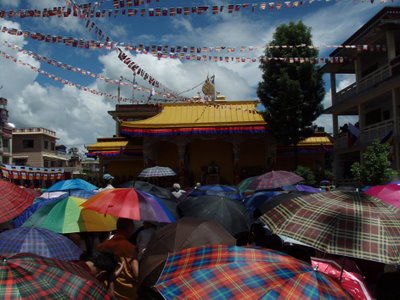 in boudha, the tamang and tibetan cultural neighborhood i've been staying in on and off the last few years, the head of the Sakya school of Tibetan buddhism, Sakya Kuma Rinpoche, conducted a few empowerments. at this long life empowerment, in which he transmitted the blessings of Amitayus (Tsepagme, the long life Buddha) to thousands of local Nepalis and Tibetans, it was quite hot during the midday, so many people brought umbrellas to shade themselves from the sun. It made for a colorful sea of fabric stretching out from the monastery, where Rinpoche is sitting on a throne in the front center.
also, if people want to send me packages or mail, this can be done like so:
michael smith
fulbright commission
po box 380
gyaneshwar, kathmandu, nepal
my other status symbols, an official visa and a motorcycle, are on the way. Motorcycles lessons are fun, but a little frustrating, as the bike is so heavy and i'm such a weakling.
tomorrow i will be going back across town with a few friends to restart a course in Tibetan grammar, taught according to indigenous Tibetan grammatical theory. I'm quite excited because we only got through subtleties of pronunciation with our teacher the translator Tony Duff last week. Hopefully with about a month of daily class my ability to read and translate will greatly improve.
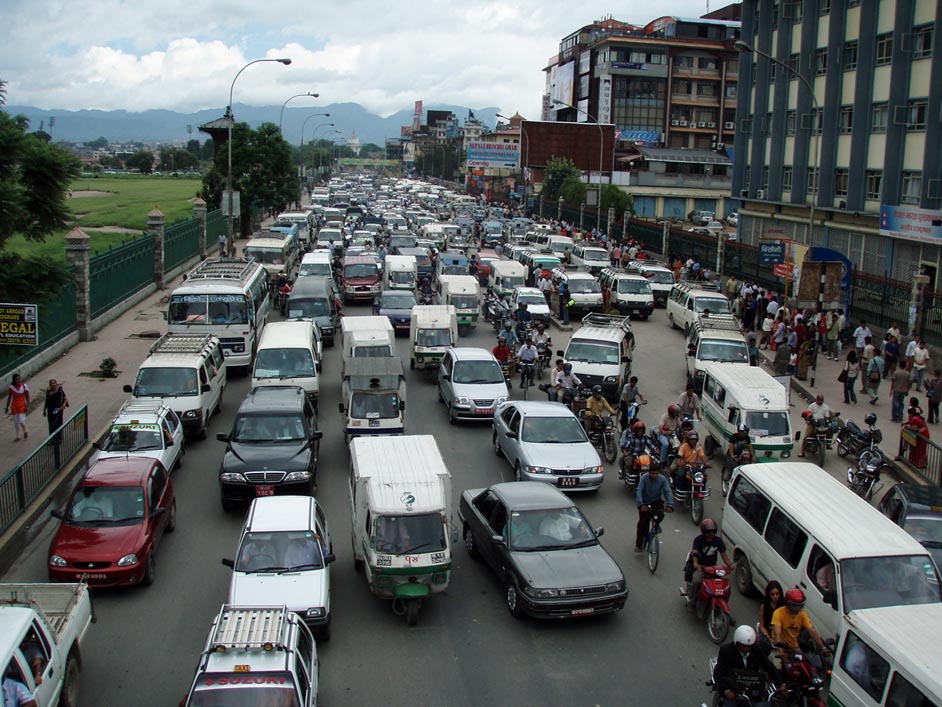 here is a photo taken of kantipath, one of the biggest roads in kathmandu, from a pedestrian bridge that crosses the road. as you can see, the nayanepal (new nepal) is on that faces many of the same problems as any rapidly expanding urban center. kathmandu is in a valley, so, like mexico city, the air pollution gets trapped, so it can get quite bad. the white and green three-wheelers are actually electric public vehicles that hold about ten people at a time and drive regular routes through the city. i use these "tempos," that are hand-me-downs from Thailand, quite a lot.
 this is the saraswati mandir (temple) located at the end of Lelegaon, about a half an hour up from Chapagaon on the road away from Kathmandu. Saraswati is the goddess of learning and music, depicted with a book and a lina, an ancient Indian prototype of the sitar.
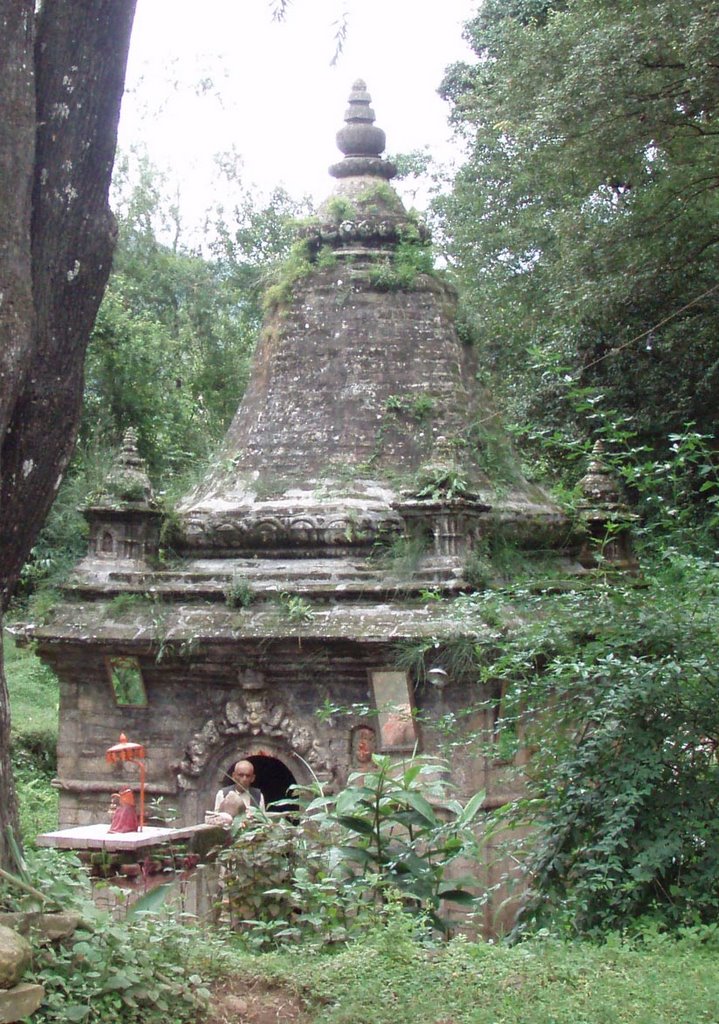 a closeup of the mandir, you can see a Newari Hindu priest at the door there. the temple itself is dedicated to shiva, i think, and the saraswati shrine is actually under the roots of a peripheral tree, with a natural pool below. for a few rupees the priest gladly gave a blessing to me and anyone else who happened to be around and willing. many temples in nepal are overgrown with plants, set amongst an amazing natural scene. this one is quite old, as are many other temples in the kathmandu valley, and has likely been in regular use for possibly up to a millineum. the mirror on the right side of the door is practically for checking the tika blessing you will recieve (the little dot at the spot of the third eye); symbolically it is for the devotee to make obeisance to the divine nature within themselves.
 in boudha, the tamang and tibetan cultural neighborhood i've been staying in on and off the last few years, the head of the Sakya school of Tibetan buddhism, Sakya Kuma Rinpoche, conducted a few empowerments. at this long life empowerment, in which he transmitted the blessings of Amitayus (Tsepagme, the long life Buddha) to thousands of local Nepalis and Tibetans, it was quite hot during the midday, so many people brought umbrellas to shade themselves from the sun. It made for a colorful sea of fabric stretching out from the monastery, where Rinpoche is sitting on a throne in the front center.
Monday, September 11, 2006
Ah, finally some more photos
 Dorje Tsering the tibetan tailor, my homestay father in 2003-04 in Boudha, Kathmandu, Nepal, who remains one of my best friends in the eastside neighborhood. I have dinner with him and his wife and daughter at least once a week, and often come by his modest shop to drink tea and chat. We usually talk about politics or local news. He is not a particularly educated man, and his serious thoughtful demeanor in this photo belies his goofy nature.
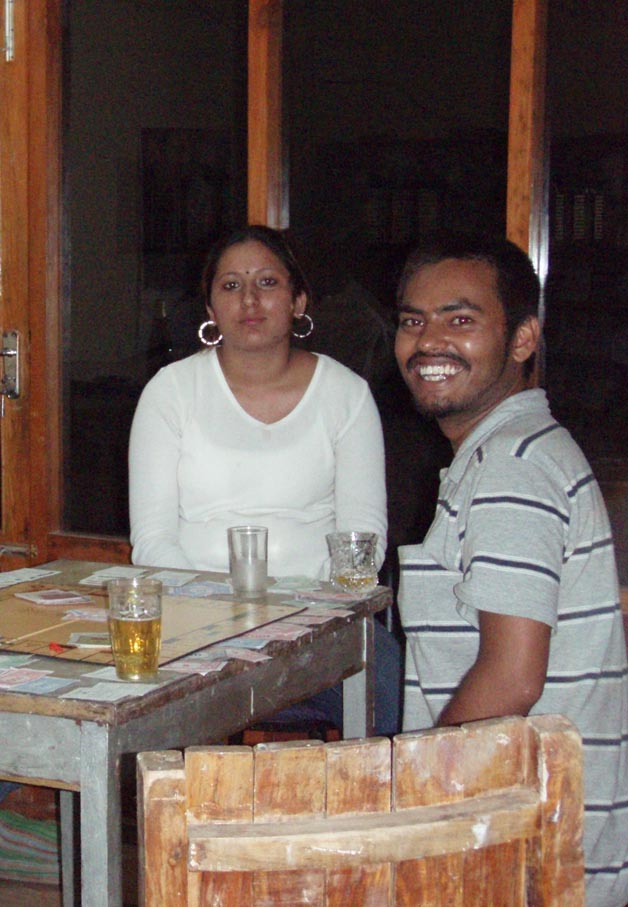 Ram and Santoshi Ballav in their dvd shop in Boudha, Kathmandu. I have been staying with them on and off this summer and last summer, as they manage the flats above their shop. It is a good deal for me since I can pay by the day for a room that shares a kitchen and bathroom with other students and travelers, so it has the feel of an apartment but the convenience of a guest house. I also have a near unlimited access to their dvd's, so i've watched some good ones lately, namely "spring, summer, fall, winter, and spring," "everything is illuminated," and "travellers and magicians," which is Dzongtsar Khyentse Rinpoche's new Bhutanese film.
 Looking southwest at sunset across the sacred Bagmati River in east Kathmandu towards the Kirateshwar hill, which is topped by an old sangeetashram, a community space for devotional musicians. Every purnima (full moon evening) they hold a free public concert showcasing local Hindustani classical artists, I've probably attended six in the last three years. It is my favorite venue in the world, as it oozes with authenticity and sacrality; the only problem are the monkeys swinging around overhead during the evening music, which borders on devotional service.
  On August 7, 2006, the day before I left on a plane from Kathmandu to Delhi, India, to meet Neil Guidry and the Tulane Social Work Masters students to tour Himachal Pradesh, I hiked around in Nagarjun forest preserve in northwest Kathmandu with some friends. This is a view to the southeast of Kathmandu, on the hill in the center of the photo is Swayambu Stupa, an ancient Buddhist reliquary monument that looks out over the valley; said to have arisen spontaneously as a lotus out of the dried lake that is the Kathmandu Valley. Swayambhu literally means "self arisen" in Sanskrit.
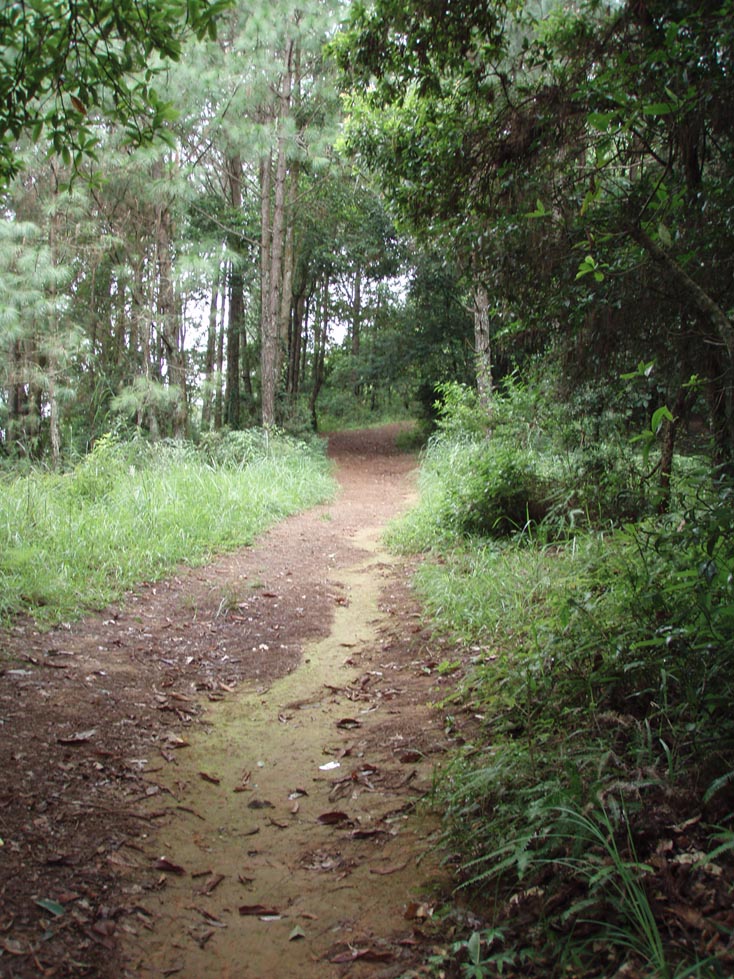 On that same hike, I was amazed at how quickly we were in the jungle, away from any city noise. Jungle is the word to use, considering it is actually a loan word from the Hindi/Nepali Sanskritic languages to English. When the British were in India, all the locals called the forest "jungle," and they adopted it as a term to describe the thick sub-tropical mess of shrub and tree, filled with tigers and rhinos and other fierce beasts the British and Indian Raj's loved to tromp around the jungle to shoot in mass quantity. That day the only wildlife we saw were leeches, spiders, and birds.
 The village that I will complete my move to in about a week, once I get my visa back from the foreign ministry, a mobile phone, and a motorcylce. I've paid the first half down for the bike, and am going to have daily lessons in the evenings with ram for the rest of the week.
motorcycle lessons
daniel and i caught a ride to chapagaon this morning with my friend samten, a real cool french/american young buddhist guy that has been living in kdu for some time with his parents. there is mad construction work going on at the monastery, today was an important day as the slab for the first floor (second floor in american english) was laid for the new public health clinic that adjoins the monastery.
building technique is quite different in south asia than in the west; here everything is done with a combination of iron rebar, concrete and local brick, which comes in an amazing array of quality and durability. first a rebar grid is laid on the flattened area where the building shall be raised, and old battered boards are used to build little walls creating channels surrounding the rebar; concrete is poured to create a solid network of uniform rows and columns of cement. the pillars will be built on top of these, using rebar and concrete as well, poured into boxes built around vertical fagots of rebar. bricks are set between these concrete pillars for the non-loadbearing walls. the floor is filled with concrete. once the pillars are up and some walls built, wooden planks are laid horizontally where the ceiling of the first level will be, covered with sheets of plastic. concrete is literally poured right on top of this to create the slab for the next level, carried up from the mixer on the ground by an assembly line of workers, who pass dishes of concrete between them. they are actually a specialized crew, who does this for a living, passing dishes of concrete all day long. the only power tools in use today, possibly the only ones on the whole site, were the cement mixer and a cement agitator, which is a gas powered machine with a tube that functions to shake the cement in place, sending the airbubbles to the surface. the rest is done by hand.
i also had my first motorcycle lesson the other day, and will have more this week. i like the feeling of riding the bike, a royal enfield 500cc. i'm going to likely buy my friend ram's 350cc royal enfield, which will be great not only for getting out to chapagaon and back to kathmandu, but is also suitable to make road trips outside the valley, even through india. hehehehehehheh!
daniel leaves tomorrow morning for china, he's got a year long gig with the bridge fund to teach english in the old border town between kham (tibet) and sichuan, china. now it is a part of sichuan, called kangding in chinese and dartsedo in tibetan. he'll be getting paid, but not a whole lot i expect because it is a nonprofit NGO. it is a good deal in many ways though, and he'll actually be working with tibetan (khampa and amdopa) kids who had to test into the program. godspeed, goodluck to him!
building technique is quite different in south asia than in the west; here everything is done with a combination of iron rebar, concrete and local brick, which comes in an amazing array of quality and durability. first a rebar grid is laid on the flattened area where the building shall be raised, and old battered boards are used to build little walls creating channels surrounding the rebar; concrete is poured to create a solid network of uniform rows and columns of cement. the pillars will be built on top of these, using rebar and concrete as well, poured into boxes built around vertical fagots of rebar. bricks are set between these concrete pillars for the non-loadbearing walls. the floor is filled with concrete. once the pillars are up and some walls built, wooden planks are laid horizontally where the ceiling of the first level will be, covered with sheets of plastic. concrete is literally poured right on top of this to create the slab for the next level, carried up from the mixer on the ground by an assembly line of workers, who pass dishes of concrete between them. they are actually a specialized crew, who does this for a living, passing dishes of concrete all day long. the only power tools in use today, possibly the only ones on the whole site, were the cement mixer and a cement agitator, which is a gas powered machine with a tube that functions to shake the cement in place, sending the airbubbles to the surface. the rest is done by hand.
i also had my first motorcycle lesson the other day, and will have more this week. i like the feeling of riding the bike, a royal enfield 500cc. i'm going to likely buy my friend ram's 350cc royal enfield, which will be great not only for getting out to chapagaon and back to kathmandu, but is also suitable to make road trips outside the valley, even through india. hehehehehehheh!
daniel leaves tomorrow morning for china, he's got a year long gig with the bridge fund to teach english in the old border town between kham (tibet) and sichuan, china. now it is a part of sichuan, called kangding in chinese and dartsedo in tibetan. he'll be getting paid, but not a whole lot i expect because it is a nonprofit NGO. it is a good deal in many ways though, and he'll actually be working with tibetan (khampa and amdopa) kids who had to test into the program. godspeed, goodluck to him!
Saturday, September 09, 2006
grammar and pronunciation classes
i have been commuting to swayambhu side of kathmandu (west) from my east side boudha dwelling to attend a tibetan class with the translator tony duff, an australian who has been studying tibetan intensely for more than 30 years, who is the translator of tsoknyi rinpoche among other great lamas, and a student of the infamous chogyam trungpa rinpoche, who was based in boulder colorado and founded the naropa university there.
in our first few classes we've only laid out the proper foundations for correct pronunciation of the language, which has opened my eyes to some misconceptions that have been taught to me by western teachers, namely that there are actually no homonyms in the tibetan language (every word that is spelled differently has a distinct pronunciation, however subtle. this is lost on the vast majority of western translators/scholars as well as many tibetans. i feel like we've set the foundation for further sensitivity for my spoken tibetan, hopefully it will help me be able to hear exactly what people say and to speak more like a tibetan does.
about to eat the creole style redbeans and rice daniel and i have made for us, ian mccormick (fellow rice grad/fulbrighter nepal/buddhist philosphical studies), the housemanager ram and his wife, and zangmo, the housegirl.
daniel and i may take some buses down to chapagaon to visit the monastery i'll move into in about a week. i'd like him to see where i'm going to be located and it will be a good chance for me to drop some stuff off. the monsoon has continued strong, it rained all night last night, and manohari, the former director of the wisconsin program (who dined with daniel and i last night on durbar marg) said it should last another three weeks or so.
a lush green trip into the countryside, however wet, awaits!
in our first few classes we've only laid out the proper foundations for correct pronunciation of the language, which has opened my eyes to some misconceptions that have been taught to me by western teachers, namely that there are actually no homonyms in the tibetan language (every word that is spelled differently has a distinct pronunciation, however subtle. this is lost on the vast majority of western translators/scholars as well as many tibetans. i feel like we've set the foundation for further sensitivity for my spoken tibetan, hopefully it will help me be able to hear exactly what people say and to speak more like a tibetan does.
about to eat the creole style redbeans and rice daniel and i have made for us, ian mccormick (fellow rice grad/fulbrighter nepal/buddhist philosphical studies), the housemanager ram and his wife, and zangmo, the housegirl.
daniel and i may take some buses down to chapagaon to visit the monastery i'll move into in about a week. i'd like him to see where i'm going to be located and it will be a good chance for me to drop some stuff off. the monsoon has continued strong, it rained all night last night, and manohari, the former director of the wisconsin program (who dined with daniel and i last night on durbar marg) said it should last another three weeks or so.
a lush green trip into the countryside, however wet, awaits!
Wednesday, September 06, 2006
bouncin' around KDU
A fun morning indeed, my Nepali friend Ram let me borrow his motorscooter and I drove Daniel west from narrow lane to wide road to narrow lane, and after some confusion (it had been 2 years since I navigated some of the roads in northeast Kathmandu we found the Chinese embassy. Daniel applied for his work visa to go and teach English in the Tibetan part of Sichuan province, in China (Kham), for the Bridge Fund, a New York nonprofit that says they will actually pay him and hook him up with a nice little house to stay in as well. He may be able to extend his work visa up to a year, which is a pretty good deal, as visas of that length for China are hard to come by. He'll even be in the mountains working with ethnic minorities - Khampa Tibetans - My jealousy, er, my joyfulness is mounting. Since today is Indra Jatra, a very important Nepali/Newari holiday, the airline offices are closed, so tomorrow he'll book his flight to Bangkok, and I'll be alone to actually start getting something done regarding my fulbright.
Indra Jatra is important because it is the holiday in which the king of Nepal (this has been going on for about 600 years, at least since the early Malla dynasty, I believe) recieves tika (red dot on the forehead) blessing from the Kumari, the young girl who is the incarnation of the Kumari goddess, a protectoress for the Hindu dynasty. She normally lives in relative seclusion in Patan (south Kdu) but is carried north through the streets in lively festivity to the central parade grounds, where the ceremonies take place. It is said that in 1769, when Prithi Narayan Shah sacked Kathmandu and established the modern nation state of Nepal ruled by the Shah kings, he was able to circumvent the Malla king from getting the blessing and took it himself, ritually making him the legitimate king for the year.
Today the Maoists are staging a huge rally in the park just north of the parade grounds, which is public space and legal now that the ban on public assembly has been lifted, and what I've heard is that they are going to try to prevent the current King Gyanendra Shah from actually recieving tika. I guess they plan on doing this by jamming the road with so many people no one can get through. I would have gone to observe the ceremony but a tussle (or a riot) could very easily break out there today, it'll be really crowded at least, and there aren't any buses or taxis running today anyway, because it is a general strike on top of it being a holiday. That's why we had to take the scooter in the morning, which was really fun actually, more so because of the lack of traffic on the roads.
Soon Ram will begin to give me motorcycle driving lessons, and I think I may buy a bike soon, in order to get from Chapagaon to Boudha and around the city and back quickly.
I've been reading and making notes of David Gellner's classic examination of Newar Buddhism: Monk, Householder, and Tantric Priest; providing a foundational understanding for more this year's more in depth research.
Also reading Paramahansa Yogananda's Autobiography of a Yogi, a masterpiece of spiritual writing, and a great inspiration. Anyone with any interest in Hinduism or personal meditative/devotional practice will find this an indespensible resource. My recent trip to India, meeting great masters and visiting amazing sacred sites has made his words a bit more accessible to my imagination, to say the least.
I've also begun a self-study course with the "teach yourself nepali" textbook. the "teach yourself" series has many faults, and i wouldn't recommend it for anyone to try to use in lue of a real class. However, since I have a good basis in spoken Nepali already, it is proving useful in filling in gaps I have in grammatical understanding, due to the fact I've never formally studied the language, I've only just picked it up though practice.
I'm reading now on BBC that the owner of Ford automobiles in the USA has said they need a new direction; it seems that sales of their cars/trucks/suv's has dropped 12% this August, resulting in layoffs of about 30,000 employees. It's unfortunate, because it seems obvious to me at least (as well as the reporter) that a big reason they've lost profitability is the attachment to gas guzzling SUVs and trucks, as gas prices have continued to climb, and consumers are becoming at least slightly conscious of the global environmental impact of emissions. They haven't made an effort to reduce emmissions of their cars, or to increase their efficiency, which will continue to hurt them, especially as California and other states are becoming serious on picking up the slack of the Federal Goverment by enacting real legislation aimed at reducing emissions in all sectors.
He's even talking about maybe hiring Lebanon born Renault and Nissan boss Carlos Ghosn to take over for him to turn the company around.
In other news, oil companies are trumpeting the discovery of a new oil field in the gulf of mexico, 270 miles southwest of New Orleans. I hope that discoveries like these won't help perpetrate the myth that oil prices will go down significantly in the ong-term future (I don't think many have that same hope about the short-term anymore), leading to poor decision making like that of Ford Motor, which in the end hurts the US economy (that's a lot of jobs), besides the environment, global security, etc.
Indra Jatra is important because it is the holiday in which the king of Nepal (this has been going on for about 600 years, at least since the early Malla dynasty, I believe) recieves tika (red dot on the forehead) blessing from the Kumari, the young girl who is the incarnation of the Kumari goddess, a protectoress for the Hindu dynasty. She normally lives in relative seclusion in Patan (south Kdu) but is carried north through the streets in lively festivity to the central parade grounds, where the ceremonies take place. It is said that in 1769, when Prithi Narayan Shah sacked Kathmandu and established the modern nation state of Nepal ruled by the Shah kings, he was able to circumvent the Malla king from getting the blessing and took it himself, ritually making him the legitimate king for the year.
Today the Maoists are staging a huge rally in the park just north of the parade grounds, which is public space and legal now that the ban on public assembly has been lifted, and what I've heard is that they are going to try to prevent the current King Gyanendra Shah from actually recieving tika. I guess they plan on doing this by jamming the road with so many people no one can get through. I would have gone to observe the ceremony but a tussle (or a riot) could very easily break out there today, it'll be really crowded at least, and there aren't any buses or taxis running today anyway, because it is a general strike on top of it being a holiday. That's why we had to take the scooter in the morning, which was really fun actually, more so because of the lack of traffic on the roads.
Soon Ram will begin to give me motorcycle driving lessons, and I think I may buy a bike soon, in order to get from Chapagaon to Boudha and around the city and back quickly.
I've been reading and making notes of David Gellner's classic examination of Newar Buddhism: Monk, Householder, and Tantric Priest; providing a foundational understanding for more this year's more in depth research.
Also reading Paramahansa Yogananda's Autobiography of a Yogi, a masterpiece of spiritual writing, and a great inspiration. Anyone with any interest in Hinduism or personal meditative/devotional practice will find this an indespensible resource. My recent trip to India, meeting great masters and visiting amazing sacred sites has made his words a bit more accessible to my imagination, to say the least.
I've also begun a self-study course with the "teach yourself nepali" textbook. the "teach yourself" series has many faults, and i wouldn't recommend it for anyone to try to use in lue of a real class. However, since I have a good basis in spoken Nepali already, it is proving useful in filling in gaps I have in grammatical understanding, due to the fact I've never formally studied the language, I've only just picked it up though practice.
I'm reading now on BBC that the owner of Ford automobiles in the USA has said they need a new direction; it seems that sales of their cars/trucks/suv's has dropped 12% this August, resulting in layoffs of about 30,000 employees. It's unfortunate, because it seems obvious to me at least (as well as the reporter) that a big reason they've lost profitability is the attachment to gas guzzling SUVs and trucks, as gas prices have continued to climb, and consumers are becoming at least slightly conscious of the global environmental impact of emissions. They haven't made an effort to reduce emmissions of their cars, or to increase their efficiency, which will continue to hurt them, especially as California and other states are becoming serious on picking up the slack of the Federal Goverment by enacting real legislation aimed at reducing emissions in all sectors.
He's even talking about maybe hiring Lebanon born Renault and Nissan boss Carlos Ghosn to take over for him to turn the company around.
In other news, oil companies are trumpeting the discovery of a new oil field in the gulf of mexico, 270 miles southwest of New Orleans. I hope that discoveries like these won't help perpetrate the myth that oil prices will go down significantly in the ong-term future (I don't think many have that same hope about the short-term anymore), leading to poor decision making like that of Ford Motor, which in the end hurts the US economy (that's a lot of jobs), besides the environment, global security, etc.
Monday, September 04, 2006
success narrowly averted
been a while since i posted, haven't had much internet access over the last few days and was also procrastinating in admitting that my camera got lost/stolen on the busride from the nepali border to kathmandu the other day so the photos i had of the india trip won't be seen. also the shift keys on this keyboard don't really work so this one is all lowercase...
the loss of a camera, a mere impermanent thing, aside, the three weeks i spent in india with the tulane group and daniel truly changed my opinion of that country and made me so happy that i still have 9 years left on my 10 year tourist visa, so i can go back hassle free anytime. himachal pradesh and uttaranchal pradesh (two northern indian mountain states below kashmir) are unbelievably gorgeous, the people are very friendly (reminded me of nepalis, not indians, but here i am making racist generalizations), and i can see myself returning to himachal for study and retreat in the future. hopefully some work as well, perhaps with the emory program in dharamsala after my fulbright studies and maybe a masters. who knows, but suffice it to say HP is a cakewalk compared to uttar pradesh/bihar, although as is said, "bihar is in the eyes of the beholder," and these eyes cried at the sight of the bodh gaya mahavihara and stupa.
from mccleod ganj daniel and i rode a 14 hour night bus to dehradun, where we jumped off at the road intersection north to rajpur, to the tibetan colony (refugee camp) where my (kathmandu) homestay mother's family lives. it was very easy to meet them (as everything was on the trip), and they fed us graciously, also letting us sleep in an adjoining staff quarters for free. we gave them a present of a few hundred rupees when we left, how much better of a feeling when you meet people who are expecting you, you have nice conversation, free meals and beds; only to give a gift to a friend when you leave. definately a meritorious way to travel.
south of dehradun is another tibetan colony where the mindroling monastery in india is located, daniel and i were able to get a blessing from the mindroling throneholder, who has been asleep for over a year, and his wife actually picked up his limp hand and patted us on the heads with it. that was unique, to say the least.
after one night with the fam we hopped an evening bus to haridwar, a holy hindu city on the mother ganga (ganges) river, the source of blessings in the land of india, which starts around kailash and carries departed souls to heaven and cleanses sins. daniel and i danced with some crazed sindhi devotees (a unique tolerant blend of sikhism and hinduism), banging drums and "doing disco" down the main road to the ghats on the river. they were happy to grab some dirty looking westerners to dance with, and were impressed with our boogying skills, perfected in new orleans clubs in the middle of the night, although unremembered the body knows, the body knows, the body knows.
as it was august 28 daniel and i sent some little candles on leaves with flower petals down the river in rememberance of the katrina victims, had some spicy indian food and went to bed. early on the 29th we wandered back to the river, i was wearing my white kurta/lungi combination making me look like a good hindu, and were met by an eager brahmin ready to perform an offering ritual for us for a sum. i took a full dip in the river, followed by daniel, we offered coconuts and flower petals to the brisk flow, thinking of the destruction in our homeland one year before, praying that it may not happen again, that although tragedy is part of life that people may be divorced from suffering.
it is hard to say how much we can change of the external world through prayer but the internal world of the mind and body (soul if you will) is always affected through our thoughts and environment; prayer is merely a cleaning of the temple of the body/mind complex.
from haridwar we embarked on a 10 hour sitting session through the indian plains to the border, where we experienced the hassle of what i had remembered of india in bambassa, the little town on the western nepali border, if i ever go back there it will not be to stay the night, i would rather lick a goat's asshole than give money to one of their hoteliers. no hitches in crossing the border the next morning, actually quite scenic as we rode bicycle rickshaws from the indian immigration office through the woods, over the mahakali river bridge to the nepali immigration office. we then caught a little tempo (3 weeled public transport) 5km to the mahendranagar public bus park, and easily procured sameday tickets, 18 hours to kathmandu!
during the night tired and trusting idiot american travelers lost sight of the digital camera, and never saw it again. i had a feeling something bad was going to happen, i'm happy that it was only the loss of a thing, and nothing more. afterall, we are still alive and didn't even get sick (which really suprised me). so much for shitting in our pants on the bus, one of my alltime favorite activities in india.
the loss of a camera, a mere impermanent thing, aside, the three weeks i spent in india with the tulane group and daniel truly changed my opinion of that country and made me so happy that i still have 9 years left on my 10 year tourist visa, so i can go back hassle free anytime. himachal pradesh and uttaranchal pradesh (two northern indian mountain states below kashmir) are unbelievably gorgeous, the people are very friendly (reminded me of nepalis, not indians, but here i am making racist generalizations), and i can see myself returning to himachal for study and retreat in the future. hopefully some work as well, perhaps with the emory program in dharamsala after my fulbright studies and maybe a masters. who knows, but suffice it to say HP is a cakewalk compared to uttar pradesh/bihar, although as is said, "bihar is in the eyes of the beholder," and these eyes cried at the sight of the bodh gaya mahavihara and stupa.
from mccleod ganj daniel and i rode a 14 hour night bus to dehradun, where we jumped off at the road intersection north to rajpur, to the tibetan colony (refugee camp) where my (kathmandu) homestay mother's family lives. it was very easy to meet them (as everything was on the trip), and they fed us graciously, also letting us sleep in an adjoining staff quarters for free. we gave them a present of a few hundred rupees when we left, how much better of a feeling when you meet people who are expecting you, you have nice conversation, free meals and beds; only to give a gift to a friend when you leave. definately a meritorious way to travel.
south of dehradun is another tibetan colony where the mindroling monastery in india is located, daniel and i were able to get a blessing from the mindroling throneholder, who has been asleep for over a year, and his wife actually picked up his limp hand and patted us on the heads with it. that was unique, to say the least.
after one night with the fam we hopped an evening bus to haridwar, a holy hindu city on the mother ganga (ganges) river, the source of blessings in the land of india, which starts around kailash and carries departed souls to heaven and cleanses sins. daniel and i danced with some crazed sindhi devotees (a unique tolerant blend of sikhism and hinduism), banging drums and "doing disco" down the main road to the ghats on the river. they were happy to grab some dirty looking westerners to dance with, and were impressed with our boogying skills, perfected in new orleans clubs in the middle of the night, although unremembered the body knows, the body knows, the body knows.
as it was august 28 daniel and i sent some little candles on leaves with flower petals down the river in rememberance of the katrina victims, had some spicy indian food and went to bed. early on the 29th we wandered back to the river, i was wearing my white kurta/lungi combination making me look like a good hindu, and were met by an eager brahmin ready to perform an offering ritual for us for a sum. i took a full dip in the river, followed by daniel, we offered coconuts and flower petals to the brisk flow, thinking of the destruction in our homeland one year before, praying that it may not happen again, that although tragedy is part of life that people may be divorced from suffering.
it is hard to say how much we can change of the external world through prayer but the internal world of the mind and body (soul if you will) is always affected through our thoughts and environment; prayer is merely a cleaning of the temple of the body/mind complex.
from haridwar we embarked on a 10 hour sitting session through the indian plains to the border, where we experienced the hassle of what i had remembered of india in bambassa, the little town on the western nepali border, if i ever go back there it will not be to stay the night, i would rather lick a goat's asshole than give money to one of their hoteliers. no hitches in crossing the border the next morning, actually quite scenic as we rode bicycle rickshaws from the indian immigration office through the woods, over the mahakali river bridge to the nepali immigration office. we then caught a little tempo (3 weeled public transport) 5km to the mahendranagar public bus park, and easily procured sameday tickets, 18 hours to kathmandu!
during the night tired and trusting idiot american travelers lost sight of the digital camera, and never saw it again. i had a feeling something bad was going to happen, i'm happy that it was only the loss of a thing, and nothing more. afterall, we are still alive and didn't even get sick (which really suprised me). so much for shitting in our pants on the bus, one of my alltime favorite activities in india.
Thursday, August 24, 2006
in Bir
it seems daniel and i have gone from what i thought was the most chill place on earth (McLeod Ganj) to a beautiful and totally relaxing height (Triun) to an even more chill place (Tso Pema), and now to perhaps an even more chill spot (Bir). We were travelling with the Tulane group, and the director Neil was paying for our accomodations and transportation, so we haven't spent much money. Now in Bir we have managed to be the guests of the Neten Chokling Rinpoche('s wife) so are staying and eating free here as well.
In about an hour we are heading over to their house to meet and greet their family, I'm very excited and am wearing my new Punjabi style full length korta, which looks pretty sharp I must admit. Their son is a 4year old reincarnated lama, so hopefully we can play with him a bit.
The rest of His Holiness' teachings were great, he continued to get into more and more detail about the different Buddhist philisophical schools' veiw on emptiness and the two truths, there were also review sessions in english every day so it was a great opportunity to get a slight intellectual understanding of what wisdom is. i don't have time to condense what he said, hopefully i'll come back to it in the future.
Tso Pema was amazing, a little lake that is sacred to Sikhs Hindus and Buddhists. Everyone there was very kind, it had the most open vibe of anywhere I've been in India. There are many monks and nuns in longterm meditation up above the lake. We were able to meet their teacher, Lama Wangdor, who gave us a beautiful teaching cutting to the essence of the point of meditation, which is seeing the basic empty but luminous and knowing nature of the mind, free from elaborations of thought, concepts, feelings and even conditions. What the existentialists like to call pure being, and I could tell when looking into his eyes that this jolly man was experiencing it all the time as he talked and laughed to us, because his glimpse had an infectious quality to it.
However, referring to what the Dalai Lama said, even this 'mere cognigtion' or the luminous nature of the mind (also called 'clear light,' which the mystics love to talk about) does not exist intrinsically/independently as the ultimate nature of the mind, because according to their highest school of philosophy, nothing exist intrinsically/inherently/independently. Everything exists in dependence on something else (causes and conditions), both nominally (through naming) or in opposition to something else (dark/light), or through the basic independent nature of all life.
not only is no man an island, but no phenomena mentally or physically exists upon itself. when this is understood in an experiential way, loving kindness and compassion spontaneously arise as a natural effect of relaxing the noose of self grasping.
Neil Guidry, the leader of the Tulane Social Work masters students Daniel and I have been travelling with (www.lhainfo.org) gave a beautiful explanation of the three major movements in Buddhism (Theravada, Mahayana, and Vajrayana) in terms of social work. Our ultimate aim is to become the Diamond Vehicle social worker, where we automatically know the effortless way to help others, because we are resting at ease in the infinite nature of the mind, which like the earth element gives support to whoever dwells upon it just because that is the nature of earth.
In about an hour we are heading over to their house to meet and greet their family, I'm very excited and am wearing my new Punjabi style full length korta, which looks pretty sharp I must admit. Their son is a 4year old reincarnated lama, so hopefully we can play with him a bit.
The rest of His Holiness' teachings were great, he continued to get into more and more detail about the different Buddhist philisophical schools' veiw on emptiness and the two truths, there were also review sessions in english every day so it was a great opportunity to get a slight intellectual understanding of what wisdom is. i don't have time to condense what he said, hopefully i'll come back to it in the future.
Tso Pema was amazing, a little lake that is sacred to Sikhs Hindus and Buddhists. Everyone there was very kind, it had the most open vibe of anywhere I've been in India. There are many monks and nuns in longterm meditation up above the lake. We were able to meet their teacher, Lama Wangdor, who gave us a beautiful teaching cutting to the essence of the point of meditation, which is seeing the basic empty but luminous and knowing nature of the mind, free from elaborations of thought, concepts, feelings and even conditions. What the existentialists like to call pure being, and I could tell when looking into his eyes that this jolly man was experiencing it all the time as he talked and laughed to us, because his glimpse had an infectious quality to it.
However, referring to what the Dalai Lama said, even this 'mere cognigtion' or the luminous nature of the mind (also called 'clear light,' which the mystics love to talk about) does not exist intrinsically/independently as the ultimate nature of the mind, because according to their highest school of philosophy, nothing exist intrinsically/inherently/independently. Everything exists in dependence on something else (causes and conditions), both nominally (through naming) or in opposition to something else (dark/light), or through the basic independent nature of all life.
not only is no man an island, but no phenomena mentally or physically exists upon itself. when this is understood in an experiential way, loving kindness and compassion spontaneously arise as a natural effect of relaxing the noose of self grasping.
Neil Guidry, the leader of the Tulane Social Work masters students Daniel and I have been travelling with (www.lhainfo.org) gave a beautiful explanation of the three major movements in Buddhism (Theravada, Mahayana, and Vajrayana) in terms of social work. Our ultimate aim is to become the Diamond Vehicle social worker, where we automatically know the effortless way to help others, because we are resting at ease in the infinite nature of the mind, which like the earth element gives support to whoever dwells upon it just because that is the nature of earth.
Monday, August 14, 2006
In the McClouds
Had no difficulty meeting up with Daniel in the Indira Ghandi Airport in New Delhi early Thursday morning, we spent the day sleeping and took a couple hour excursion on the badass new Delhi metro (which is styled after the London Underground and amazingly clean and orderly, especially when coming off the hectic streets) to Pahargang, a touristy area, to change money and look around. Thursday evening we boarded our direct sleeper bus to McCloud Ganj, where His Holiness the Dalai Lama lives with a few thousand other Tibetans in what is appearing to be some kind of Tibetan Buddhist Disney Land. We had a little sleeper compartment, got a decent rest, although I think Danno is still kind of jetlagged and adjusting; after all we did hit the ground running and have been walking around a lot and eating lots of spicy Indian food.
We attended the first of five days of teachings by His Holiness this morning at his temple. There are many South Korean nuns monks and layfolk, who have requested and sponsored the teaching we are attending, so thanks Korean Buddhist for the free teachings! HH teaches in Tibetan which is translated into Korean, and all the westerners have little fm radios which pick up the teachings translated into English and broadcast in the temple. It's a pretty cool way to do it. There is also a chinese station; the only other two stations I can pick up is some Indian news and what appears to be some foreign (American) music station.
His Holiness is teaching on both Shantideva's Bodhisattvacaryavatara (Guide to a Bodhisattva's Way of Life) and Thogme Gyaltsen's 37 Practices of a Bodhisattva. A Bodhisattva is literally an "enlightening being," characterized by her profound compassion for all beings that suffer (all beings), loving kindness and the fervent wish that everyone may become enlightened. So the Dalai Lama is discussing the ways for us to all become ultimate Buddhist heros as well.
He opened the teachings with a history of Tibetan Buddhism and its connection to Korean Buddhism, emphasizing how Tibetan Buddhism holds the pure Nalanda lineage, through masters like Shantideva, who wrote the text we're working on. He only began to discuss the very difficult 9th Chapter, which deals with the Perfection of Wisdom (Prajnaparamita), which essentially is the way to "understand emptiness." He began this discussion by explaining what Buddhanature is: intrinsically empty (of selfnature), basic innate nondual, non conceptual luminous, etc. This is obscured with various mental afflictions, which prevent understanding our true self nature as Buddhas, so we suffer.
Why do we suffer? Because of the ignorance which is the false conception that there is an eternal unchanging self that exists independant, that can be defined merely on its own side (in constrast to relative with others). He discussed the wisdom that dispells this ignorance and its importance at great lengths. From Ignorance (of the true nature of ourselves and our mind) leads to all kinds of actions and thoughts that create many imprints in the mindstreams of self and others, which results in the way we percieve the universe as little individuals devoid of indentification with others, leading to attraction and aversion, which leads to all kinds of fun stuff like anger, hatred, greed, jealousy, pride, etc.
He also discussed the two truths in the context of Bodhicitta (the altruistic mind of enlightenment) which characterizes a Bodhisattva (the uber-compassionate/lovingly kind awakening being). Conventional/Relative/Deceptive truth is the dualistic conceptualization of the world as it appears to our obscured (non-buddha) minds, which are mired in all kinds of afflictions. Everything we can conceptualize as true falls into this catagory, including "self" and "buddha" and even Bodhicitta, which in this context is both the aspiration to free all beings from the sufferings of cyclic existence and the applied action that actually does this. This is the METHOD of the bodhisattva.
Ultimately speaking, however, nothing we name or conceive of in dualistic terms (good/bad, happy/sad, up/down, etc.) is actually TRUE. Relativity theory has taught us this, so has Wittgenstein and Postmodernism, etc. Ultimate Bodhicitta is the wisdom which understands emptiness (or conversely the wisdom which understands the co-dependent origination of all phenomena) in tandem with the aspired and applied drive to help everyone else.
This is a little redundant because if the meditator truly percieves ultimate truth (which is difficult to discuss in words, being the noetic), then she realizes the interconnectivity and impermanence of all existent phenomena and is spontaneously and effortlessly driven to work for the benefit of everyone she comes into contact with.
The lecture was actually quite a lot more technical than all this, and most of the Tulane social work masters students that I've been travelling lost interest pretty fast, although Daniel seemed to get a lot out of it, considering he has some background in Buddhist philosophy and a great interest in the workings of the mind.
The Dalai Lama taught from 9:30 to 11:30 and then again from 1pm to 3:30, today was the first time I was able to see him with my own eyes and I must say I didn't cry like a lot of my Tibetan friends said I would but I did gain the conviction that this guy actually has manifested what he talks about in an authentic and complete way. There was a summary session for English speakers held from 4:30 to 5:30, so besides hanging out at His Holiness' temple, eating and shitting, I didn't really do all that much today, and I feel pretty great.
We attended the first of five days of teachings by His Holiness this morning at his temple. There are many South Korean nuns monks and layfolk, who have requested and sponsored the teaching we are attending, so thanks Korean Buddhist for the free teachings! HH teaches in Tibetan which is translated into Korean, and all the westerners have little fm radios which pick up the teachings translated into English and broadcast in the temple. It's a pretty cool way to do it. There is also a chinese station; the only other two stations I can pick up is some Indian news and what appears to be some foreign (American) music station.
His Holiness is teaching on both Shantideva's Bodhisattvacaryavatara (Guide to a Bodhisattva's Way of Life) and Thogme Gyaltsen's 37 Practices of a Bodhisattva. A Bodhisattva is literally an "enlightening being," characterized by her profound compassion for all beings that suffer (all beings), loving kindness and the fervent wish that everyone may become enlightened. So the Dalai Lama is discussing the ways for us to all become ultimate Buddhist heros as well.
He opened the teachings with a history of Tibetan Buddhism and its connection to Korean Buddhism, emphasizing how Tibetan Buddhism holds the pure Nalanda lineage, through masters like Shantideva, who wrote the text we're working on. He only began to discuss the very difficult 9th Chapter, which deals with the Perfection of Wisdom (Prajnaparamita), which essentially is the way to "understand emptiness." He began this discussion by explaining what Buddhanature is: intrinsically empty (of selfnature), basic innate nondual, non conceptual luminous, etc. This is obscured with various mental afflictions, which prevent understanding our true self nature as Buddhas, so we suffer.
Why do we suffer? Because of the ignorance which is the false conception that there is an eternal unchanging self that exists independant, that can be defined merely on its own side (in constrast to relative with others). He discussed the wisdom that dispells this ignorance and its importance at great lengths. From Ignorance (of the true nature of ourselves and our mind) leads to all kinds of actions and thoughts that create many imprints in the mindstreams of self and others, which results in the way we percieve the universe as little individuals devoid of indentification with others, leading to attraction and aversion, which leads to all kinds of fun stuff like anger, hatred, greed, jealousy, pride, etc.
He also discussed the two truths in the context of Bodhicitta (the altruistic mind of enlightenment) which characterizes a Bodhisattva (the uber-compassionate/lovingly kind awakening being). Conventional/Relative/Deceptive truth is the dualistic conceptualization of the world as it appears to our obscured (non-buddha) minds, which are mired in all kinds of afflictions. Everything we can conceptualize as true falls into this catagory, including "self" and "buddha" and even Bodhicitta, which in this context is both the aspiration to free all beings from the sufferings of cyclic existence and the applied action that actually does this. This is the METHOD of the bodhisattva.
Ultimately speaking, however, nothing we name or conceive of in dualistic terms (good/bad, happy/sad, up/down, etc.) is actually TRUE. Relativity theory has taught us this, so has Wittgenstein and Postmodernism, etc. Ultimate Bodhicitta is the wisdom which understands emptiness (or conversely the wisdom which understands the co-dependent origination of all phenomena) in tandem with the aspired and applied drive to help everyone else.
This is a little redundant because if the meditator truly percieves ultimate truth (which is difficult to discuss in words, being the noetic), then she realizes the interconnectivity and impermanence of all existent phenomena and is spontaneously and effortlessly driven to work for the benefit of everyone she comes into contact with.
The lecture was actually quite a lot more technical than all this, and most of the Tulane social work masters students that I've been travelling lost interest pretty fast, although Daniel seemed to get a lot out of it, considering he has some background in Buddhist philosophy and a great interest in the workings of the mind.
The Dalai Lama taught from 9:30 to 11:30 and then again from 1pm to 3:30, today was the first time I was able to see him with my own eyes and I must say I didn't cry like a lot of my Tibetan friends said I would but I did gain the conviction that this guy actually has manifested what he talks about in an authentic and complete way. There was a summary session for English speakers held from 4:30 to 5:30, so besides hanging out at His Holiness' temple, eating and shitting, I didn't really do all that much today, and I feel pretty great.
Thursday, August 10, 2006
Auspicious Transit to Delhi
Surely this trip is in the hands of the Guru; obstacles cleared to make it to Dharamsala to hear the booming wisdom voice of Dalai Lama, to humbly assist the Tulane students in India, to visit some bomb ass holy sites.
As I was waiting in line to check in at the Jet Airways counter in the KDU airport, I heard a female voice yell, "Rechungpa!" (which is the spiritual name that my teacher Phakchok Rinpoche uses for me). I turned around to see Norbu, a Tibetan student of Rinpoche's with a very beautiful Tibetan woman of indeterminable age. Norbu seemed very excited to see me, and asked where I was going. "Delhi," I replied, and she ran over to request that I check one of their many bags for them. This I happily did, and she slipped me 1000 nepali rupees to cover the excess charge.
I met back up with the Tibetan women at the baggage claim in Delhi after an uneventful hour flight west, and helped them with their collection of heavy duffle bags. Norbu whispered to me that the woman with her was her older sister, Tenzin Choyang, who is the wife of the Neten Chokling Rinpoche and therefore the mother of the great Dzogchen yogi Tulku Orgyen Rinpoche's reincarnation (who is my root teacher Phakchok Rinpoche's root teacher/ grandfather). They explained that the Neten Chokling has made a movie about the life of the famous yogi/poet Jetsun Milarepa (just writing his name fills my chest with veneration), and their extra baggage was filled with about 40 amazing hand gold painted images of the great master Milarepa, gifts for sponsors to the movie project. They were worried that they would not be able to carry all their bags on board, and needed to find someone to help them. I am named Rechungpa after Milarepa's famous disciple, Rechungpa, and in their pure wisdom perception they saw a humble disciple delivered by Milarepa for the sake of transporting the thankas (paintings) cheaply and safely to Delhi. Oh how fortunate I am to be in the right place at the right time to help these amazing people!
After some casual inquiry and conversation she invited me to come visit her in Bir, which is close to Dharamsala, where I am going with Daniel on Saturday night. Hopefully a future post will discuss a trip to Bir to visit the holy child.
I walked them out to meet their driver and after some haggling with taxi drivers Yumchen (Great Mother) Choyang offered to drive me part of the way to Majnu Ka Tilla where I was to meet up with Neil and the LHA (Louisiana Himalayan Association)/Tulane Social Work group, with whom I am now. We managed to cram everything in the little car and their nice Tibetan driver took us to an area of South Delhi where they lived, an old Buddhist area. They invited me in for some tea, I consented and spent some time relaxing with Choyang and Norbu and their two sisters, Lobsang and Tashi, all four very excited beautiful Tibetan young women; while their driver arranged a car to bring me the rest of the way to my hotel.
I felt unbelievably blessed at that time to have such a nice transit to Delhi, all obstacles cleared immediately, unveiling natural realization of the truth of interdependent origination and the effect of actions. Perhaps some slight connection to this lineage from the past, or one developed in the last few years, has led me to such undeniably good circumstance!
I rejoice in the merit thus created, may all beings be happy, may their suffering be gone and may I experience it for their sake, and finally may all experience the final happiness of realizing their inherent goodness as their own mind nature!
As I was waiting in line to check in at the Jet Airways counter in the KDU airport, I heard a female voice yell, "Rechungpa!" (which is the spiritual name that my teacher Phakchok Rinpoche uses for me). I turned around to see Norbu, a Tibetan student of Rinpoche's with a very beautiful Tibetan woman of indeterminable age. Norbu seemed very excited to see me, and asked where I was going. "Delhi," I replied, and she ran over to request that I check one of their many bags for them. This I happily did, and she slipped me 1000 nepali rupees to cover the excess charge.
I met back up with the Tibetan women at the baggage claim in Delhi after an uneventful hour flight west, and helped them with their collection of heavy duffle bags. Norbu whispered to me that the woman with her was her older sister, Tenzin Choyang, who is the wife of the Neten Chokling Rinpoche and therefore the mother of the great Dzogchen yogi Tulku Orgyen Rinpoche's reincarnation (who is my root teacher Phakchok Rinpoche's root teacher/ grandfather). They explained that the Neten Chokling has made a movie about the life of the famous yogi/poet Jetsun Milarepa (just writing his name fills my chest with veneration), and their extra baggage was filled with about 40 amazing hand gold painted images of the great master Milarepa, gifts for sponsors to the movie project. They were worried that they would not be able to carry all their bags on board, and needed to find someone to help them. I am named Rechungpa after Milarepa's famous disciple, Rechungpa, and in their pure wisdom perception they saw a humble disciple delivered by Milarepa for the sake of transporting the thankas (paintings) cheaply and safely to Delhi. Oh how fortunate I am to be in the right place at the right time to help these amazing people!
After some casual inquiry and conversation she invited me to come visit her in Bir, which is close to Dharamsala, where I am going with Daniel on Saturday night. Hopefully a future post will discuss a trip to Bir to visit the holy child.
I walked them out to meet their driver and after some haggling with taxi drivers Yumchen (Great Mother) Choyang offered to drive me part of the way to Majnu Ka Tilla where I was to meet up with Neil and the LHA (Louisiana Himalayan Association)/Tulane Social Work group, with whom I am now. We managed to cram everything in the little car and their nice Tibetan driver took us to an area of South Delhi where they lived, an old Buddhist area. They invited me in for some tea, I consented and spent some time relaxing with Choyang and Norbu and their two sisters, Lobsang and Tashi, all four very excited beautiful Tibetan young women; while their driver arranged a car to bring me the rest of the way to my hotel.
I felt unbelievably blessed at that time to have such a nice transit to Delhi, all obstacles cleared immediately, unveiling natural realization of the truth of interdependent origination and the effect of actions. Perhaps some slight connection to this lineage from the past, or one developed in the last few years, has led me to such undeniably good circumstance!
I rejoice in the merit thus created, may all beings be happy, may their suffering be gone and may I experience it for their sake, and finally may all experience the final happiness of realizing their inherent goodness as their own mind nature!
Monday, August 07, 2006
Transition
I recently revisited Chapagaon village and the monastery I will move into in about a month. It is going to be a very good situation, there is a monk who knows Tibetan very well and will help me with my translation. The 33 young monks are very energetic.  The photo to the right looks over a rice patty to the sacred Vajravarahi grove, which is across the road from the monastery. The grove surrounds an important Vajravarahi temple that is about 1100 years old. The photo was taken about a 5 minute walk down the road east from the monastery, looking southeast.
Leaving for Delhi in a few hours, cant wait for the smog and mess of humanity. In India, real life seems a little too real sometimes, but usually just real; a good contrast with the monotony of routine. Perception of reality also gaining a sharper quality lately, as I have given up all intoxicant for the next 10 months. I promised the Lama of the Chapagaon gompa (monastery) that I'd forego even the taste of liquor from now until I move out of the gompa.
Intellectually the last few weeks have been more stimulating that expected, thanks to Chris, Re and Sarah, three graduate students that have been living in Ram's House with me, our discussions about Tibetan, Nepali, Chinese or Indian culture planting many new ideas for inquiry into my clearing brains.
One possible masters thesis project I've thought of is a compare/contrast the preliminary practices for the Longchen Nyingthig (Heart Essence of the Great Expanse) cycle and the Lama Tukdrub Barche Kunsel (Guru's Heart Practice, Dispelling all Obstacles). These are two popular tersars (New Treasures) of the Old School of Tibetan Buddhism, and the White Monastery in Boudha is a perfect place to write it up, as the lamas there are lineage holders for both cycles of teachings.
Yesterday Chris, Gaeline (a dready Swiss student of Tibetan), and I taxied across the city to the huge Nagarjun forest, and hiked up to an amazing veiw of Kathmandu looking towards the southeast. Had a few leech run-ins, and it was very muggy, so I was happy. After a couple minute car ride and couple minute hike, it was as if we were in the woods days away from civilization. Very worth the 10 rupee (15 cent) entrance fee.
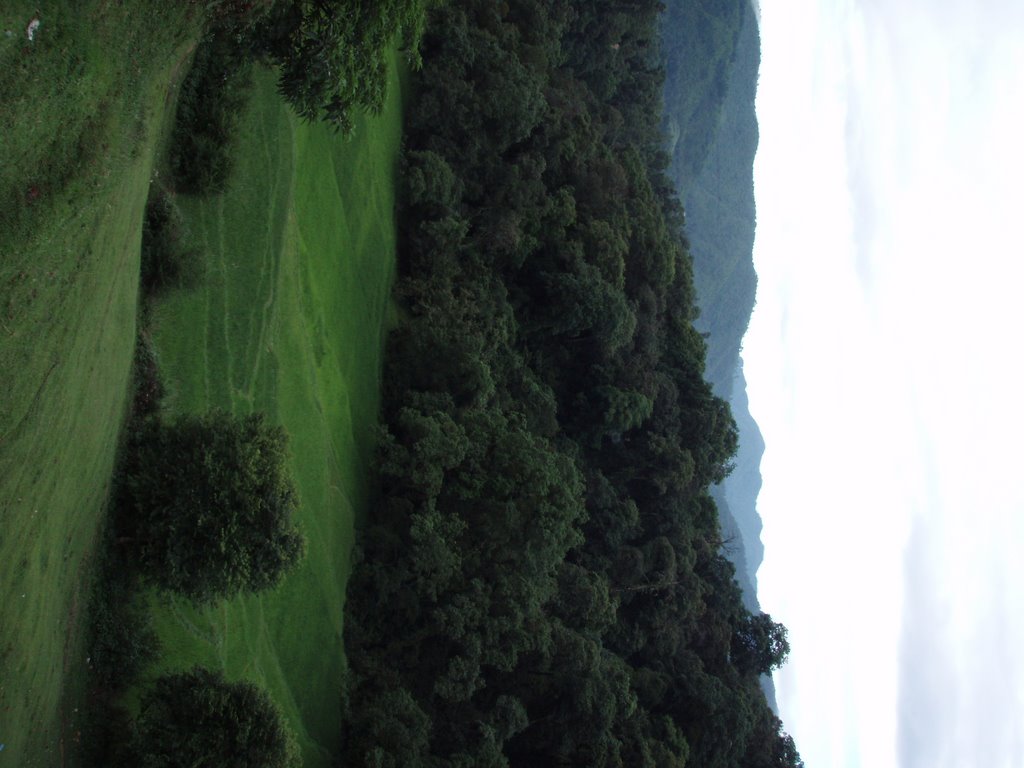 The photo to the right looks over a rice patty to the sacred Vajravarahi grove, which is across the road from the monastery. The grove surrounds an important Vajravarahi temple that is about 1100 years old. The photo was taken about a 5 minute walk down the road east from the monastery, looking southeast.
Leaving for Delhi in a few hours, cant wait for the smog and mess of humanity. In India, real life seems a little too real sometimes, but usually just real; a good contrast with the monotony of routine. Perception of reality also gaining a sharper quality lately, as I have given up all intoxicant for the next 10 months. I promised the Lama of the Chapagaon gompa (monastery) that I'd forego even the taste of liquor from now until I move out of the gompa.
Intellectually the last few weeks have been more stimulating that expected, thanks to Chris, Re and Sarah, three graduate students that have been living in Ram's House with me, our discussions about Tibetan, Nepali, Chinese or Indian culture planting many new ideas for inquiry into my clearing brains.
One possible masters thesis project I've thought of is a compare/contrast the preliminary practices for the Longchen Nyingthig (Heart Essence of the Great Expanse) cycle and the Lama Tukdrub Barche Kunsel (Guru's Heart Practice, Dispelling all Obstacles). These are two popular tersars (New Treasures) of the Old School of Tibetan Buddhism, and the White Monastery in Boudha is a perfect place to write it up, as the lamas there are lineage holders for both cycles of teachings.
Yesterday Chris, Gaeline (a dready Swiss student of Tibetan), and I taxied across the city to the huge Nagarjun forest, and hiked up to an amazing veiw of Kathmandu looking towards the southeast. Had a few leech run-ins, and it was very muggy, so I was happy. After a couple minute car ride and couple minute hike, it was as if we were in the woods days away from civilization. Very worth the 10 rupee (15 cent) entrance fee.
Subscribe to:
Posts (Atom)